Chapter 10. Toxics

PFAS Compounds are Ubiquitous in Casco Bay’s Waters and Marine Life

However PFAS Concentrations in Surface Waters and in Fish and Shellfish Tissue Are Nearly Always Below Levels of Concern

At a Glance

Concerns about PFAS have sparked an increase in sampling. At the same time, the state has stopped collecting data on PAHs and PCBs.

The August 19, 2024 AFFF spill in Brunswick caused a major contamination event.

13 weeks after the spill PFAS concentrations in water had generally returned to background levels, but remained elevated in fish and shellfish tissue.

The newly constructed CAD Cell in Portland Harbor is allowing removal of sediment with legacy contamination from the harbor.

Since the 2021 Report

PFAS has emerged as a topic of concern for both the general public and resource managers, and in response there has been a sharp increase in sampling for PFAS. This has provided an abundance of new information on the spatial and temporal variation in PFAS contamination along with concentrations of PFAS in the tissues of numerous marine species. The state has not collected data on PAHs, PCBs, and metals in blue mussels since 2017 however, so we are not able to report an updated trend for these contaminants. Since 2020, a solution has also been found to the legacy contamination in the sediments of Portland Harbor. After decades of planning, a Confined Aquatic Disposal (CAD) cell was constructed in Portland Harbor in winter 2024 as a way to permanently contain contaminated sediments.

Toxics are biologically active compounds that have been released into the environment by humans and are known to cause harm to humans or the environment. Some persistent toxic compounds, such as PCBs and DDT,  have been largely phased out and environmental concentrations are slowly declining. Areas with industrial history can have high levels of these compounds built up in the environment, which is referred to as legacy contamination.

While many legacy contaminants have been phased out or banned, new compounds are constantly being developed and it often takes years to realize the persistence or impacts of compounds. PFAS stands for per- and polyfluoralalkyl substances, and is a group that encompasses numerous long-lasting synthetic chemicals of potential water quality and health concern. Different PFAS compounds are produced by different sources, and some PFAS compounds are of higher levels of concern than others. Perfluorooctanoic Acid (PFOA) and Perfluorooctane Sulfonate (PFOS) are two of the most well-studied and commonly measured PFAS compounds.
CAD-Cell
Photo: City of Portland

The Portland CAD Cell

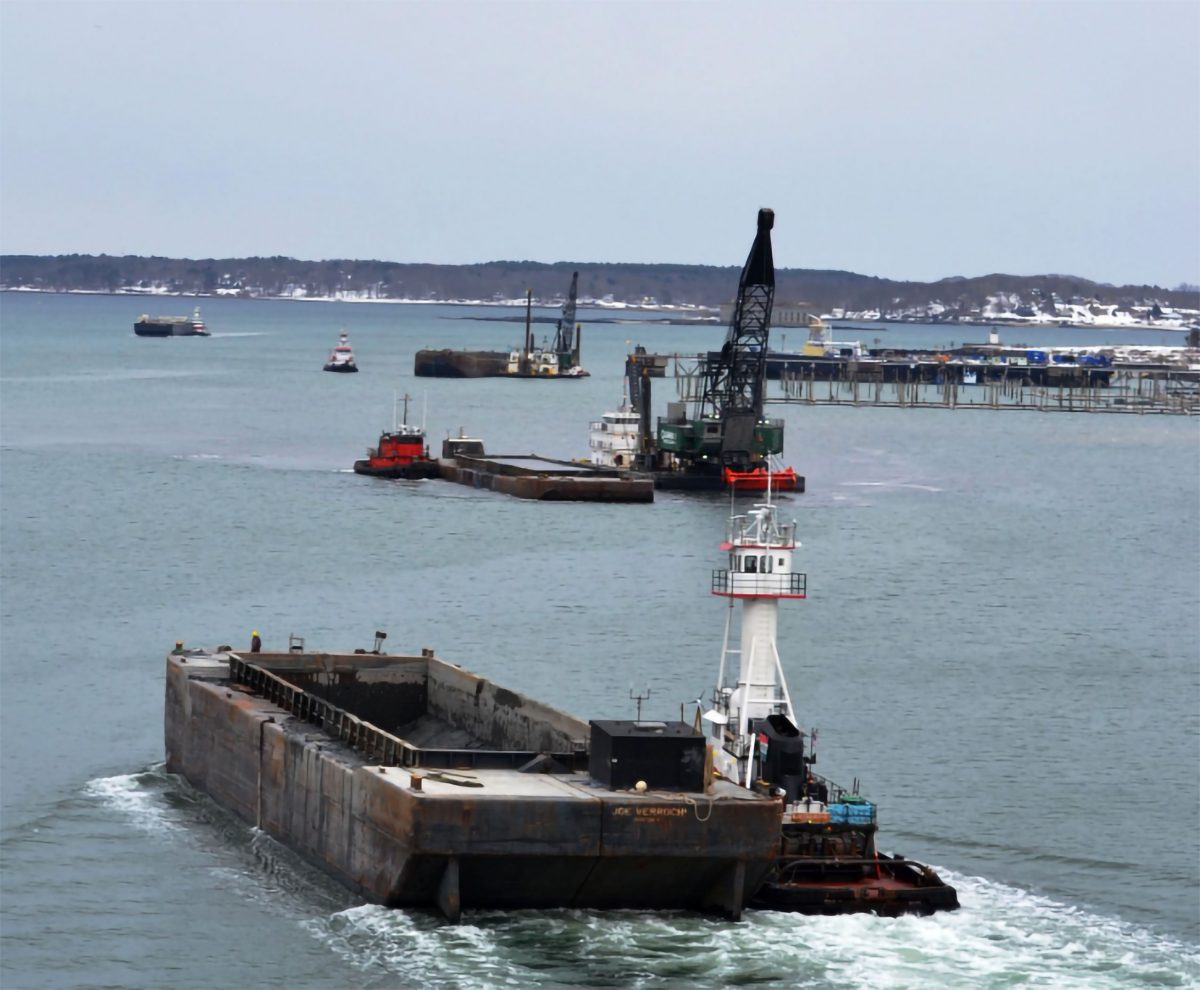
In the last State of the Bay report, CBEP reported the high levels of legacy contaminants (including metals, PAHs, PCBs, DDT residues, butyltins, dioxins, and furans) in the sediment of Portland Harbor. That contamination has long prevented the harbor from being dredged, as there was no safe and affordable solution to dispose of the contaminated sediments. After decades of planning, a Confined Aquatic Disposal (CAD) cell was constructed in Portland Harbor in winter 2024 as a way to permanently contain contaminated sediments. The harbor is now being dredged for the first time in decades, clearing out contaminated sediment and improving harbor safety and access to waterfront businesses.


Researchers Estimate That the Kennebec River Is the Single Largest Source of PFOS to Casco Bay

Friends of Casco Bay and Bigelow Laboratory for Ocean Sciences collaborated to sample PFAS compounds from 80 stations in the surface waters of Casco Bay and its tributaries from September 2024 to June 2025.

Based on the presence and concentration of certain PFAS compounds, they were able to determine if sites contained contamination from terrestrial/riverine sources, marine sources, or from AFFF (firefighting foam, see section below).

Sites with riverine/terrestrial influences had total PFAS concentrations that were approximately five-fold higher than offshore waters, suggesting that most PFAS in the waters of Casco Bay comes from terrestrial sources.  While PFOS concentrations in rivers were below levels of concern, researchers estimate that the Kennebec River is still the largest single source of PFOS to Casco Bay because of the high volumes of water with terrestrial origins it introduces to the Bay.

All samples from the project fell below EPA’s advisory levels for acute and chronic PFOA contamination, and all samples fell below the levels for acute PFOS contamination. Only two sites exceeded the advisory levels for chronic PFOS contamination, and both locations are in the proximity of the Brunswick Naval Air Station.


Criteria component Acute water column (CMC)¹ (mg/L) Chronic water column (CCC)² (mg/L) Invertebrate whole-body (mg/kg ww³) Fish whole-body (mg/kg ww³)
Fish muscle (mg/kg ww³)
PFOA Magnitude 3.1 0.10 1.18 6.49 mg/kg 0.133 mg/kg
PFOS Magnitude 0.071 0.00025 0.028 0.201 mg/kg 0.087 mg/kg
Duration 1-hour average 4-day average Instantaneous Instantaneous Instantaneous
Frequency Not to be exceeded more than once in three years, on average Not to be exceeded more than once in three years, on average Not to be exceeded
¹ Criterion Maximum Concentration.
² Criterion Continuous Concentration.
³ Wet-Weight.

Table 1. EPA advisory criteria for PFOS and PFOA in freshwater. EPA has published benchmarks, but no criteria, for marine waters.

Figure 1.  Fractional contributions of PFAS from riverine/terrestrial (green), marine (light and dark blue), and AFFF sources in September 2024 sampling.

Figure 2. Fractional contributions of PFAS from riverine/terrestrial (green), marine (two shades of blue), and AFFF sources in June 2025 sampling.

PFAS in Fish and Shellfish: No Species Exceeded the Maine CDC Consumption Recommendations

Since 2019, the Surface Water Ambient Toxins program at Maine Department of Environmental Protection has been measuring PFAS compounds in composite samples of fish and shellfish.

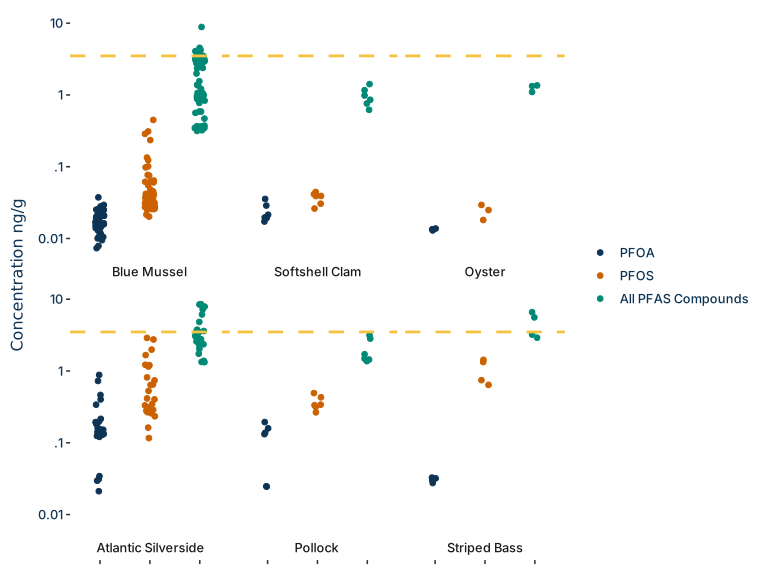
The species sampled differ each year, but over the last seven years they have semi-regularly sampled many of the same species from locations across Casco Bay. Blue mussels and Atlantic silversides frequently had the highest tissue concentrations of PFOS and total PFAS compounds.

Maine Center for Disease Control and Prevention calculates Fish Tissue Advisory Limits (FTAL) for contaminants to determine if a consumption advisory is necessary. At a concentration of 3.5 ng/g of PFOS (dashed yellow line) Maine CDC advises consuming no more than one serving per week. No fish or shellfish tissue concentrations exceeded this FTAL and the only species that came close were Atlantic silversides, which are most frequently used as bait fish.

Figure 3. Concentrations of PFOA, PFOS, and all PFAS compounds in six aquatic species in Casco Bay. PFOS concentrations did not exceed Maine CDC Consumption Recommendations.

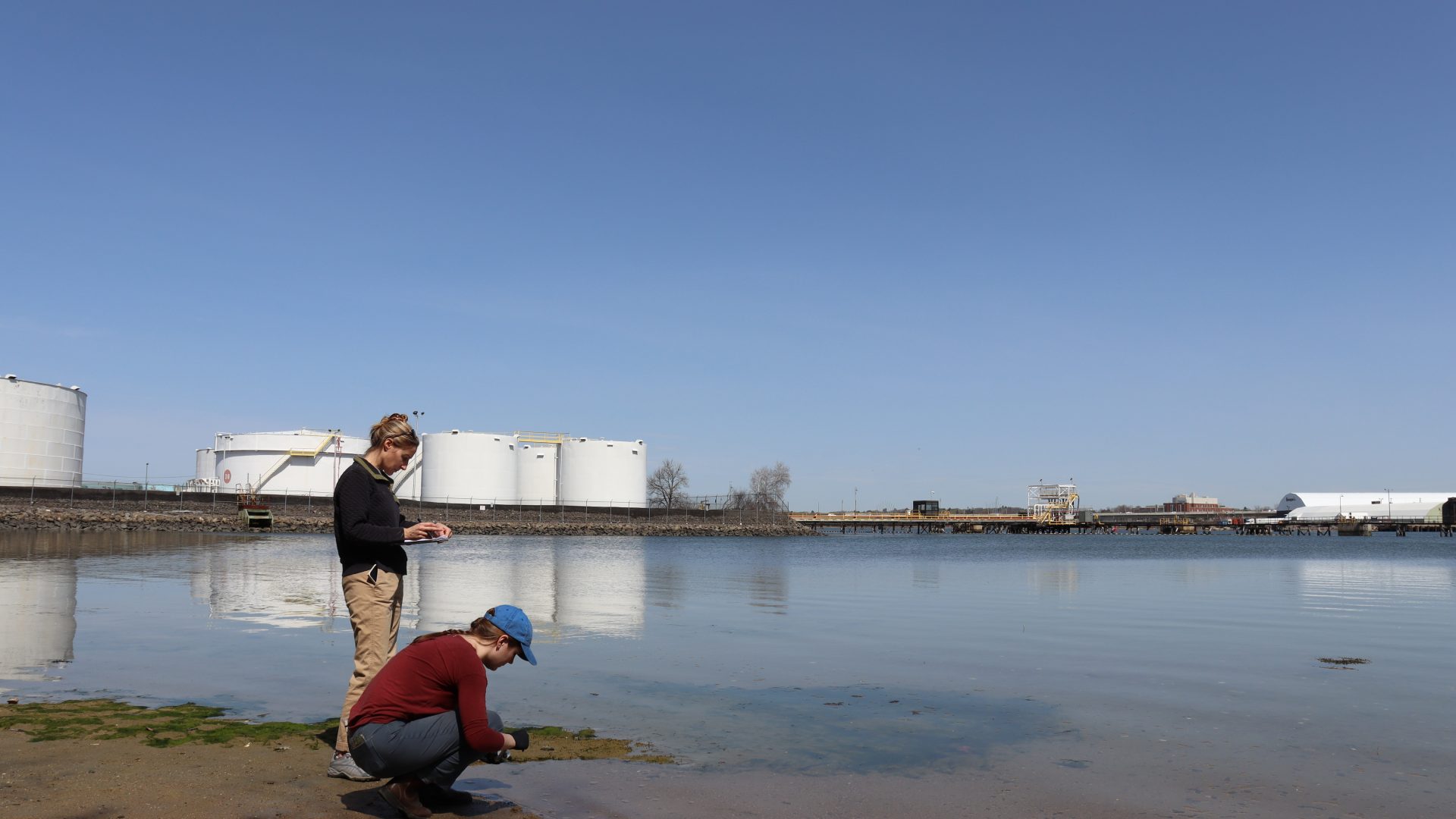
Ch. 15 PFAS Sediment Sampling FOCB Photo Meghan Vigeant

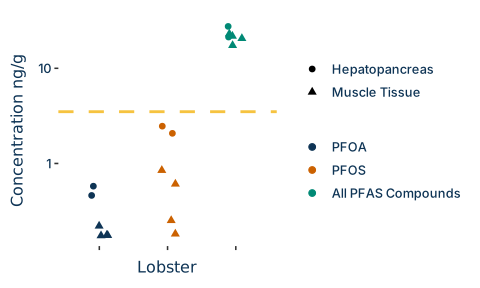
PFAS in Lobster: Meat Considered Safe to Eat

Figure 4. PFOA, PFOS, and PFAS concentrations measured in lobster muscle (claws and tail) and hepatopancreas (tomalley) in Casco Bay.

The SWAT program has measure PFAS compounds in lobster muscle tissue and hepatopancreas—the soft grean paste-like substance known as “tomalley”—separately.

While PFOS levels in muscle tissues are in safe ranges, the hepatopancreas can concentrate toxins and has PFOS concentrations near Maine CDC’s FTAL. Based on this and the levels of other contaminants, Maine CDC advises consumers to not eat the tomalley.

Spill of Firefighting Foam in Brunswick Was a Source of PFAS Contamination in Casco Bay in August 2024

On August 19th, 2024 there was a major spill of AFFF, firefighting foam containing high concentrations of PFAS, at the Brunswick Naval Air Station. This occurred three weeks before Friends of Casco Bay and Bigelow’s first sampling event, and they were able to track the dispersal and eventual dilution of the PFAS compounds from this spill through Harpswell Cove.

The SWAT program at Maine DEP also mobilized to conduct additional sampling in the region to determine the safety of harvesting and consuming marine species in the area of the spill.

PFAS concentrations in surface waters peaked at over 950 ng/L in the site nearest the spill in the weeks following, surpassing EPAs chronic threshold for PFAS contamination but not the acute threshold. Concentrations declined rapidly over the following months and returned to baseline levels by 3-4 months following the spill.

Figure 5. PFAS concentrations 2 miles (Site 3) and 5 miles (Site 82) from the site of the spill in the year following.

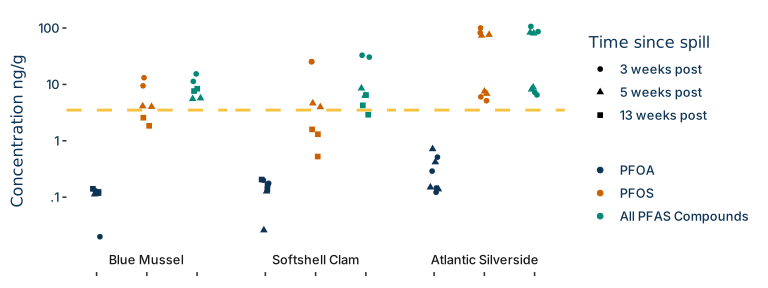
PFAS Concentrations in Fish and Shellfish After Spill Exceeded Maine CDC’s Consumption Advisory Limits

Figure 6. After the firefighting foam spill in Brunswick, PFAS concentrations in fish and shellfish exceeded Maine CDC’s FTAL for at least three months.

PFAS concentrations in local shellfish and finfish tissues spiked following the spill and PFOS concentrations exceeded Maine CDC’s FTAL. Concentrations slowly declined in the months following, but had not yet reached baseline levels by three months following the spills. This shows how species like mussels, clams, and baitfish can present a lingering source of contamination to humans or wildlife that consume them even after water quality has improved. Sampling of shellfish continued into 2025, but data from those sampling events were not yet available for this report.

Looking ahead to 2030

Attention on PFAS will likely continue as efforts to set criteria and determine what levels of PFAS can be considered safe continue. Attention is also growing on other potential contamination sources. Multiple towns in the Casco Bay watershed have passed or are considering fertilizer and pesticide ordinances to limit the introduction of chemicals and excess nutrients into surface waters and are interested in collecting data to understand the levels of those chemicals. Stormwater (see Streams chapter) and chloride contamination (see Emerging Data chapter) are also topics of concern that present data collection opportunities.

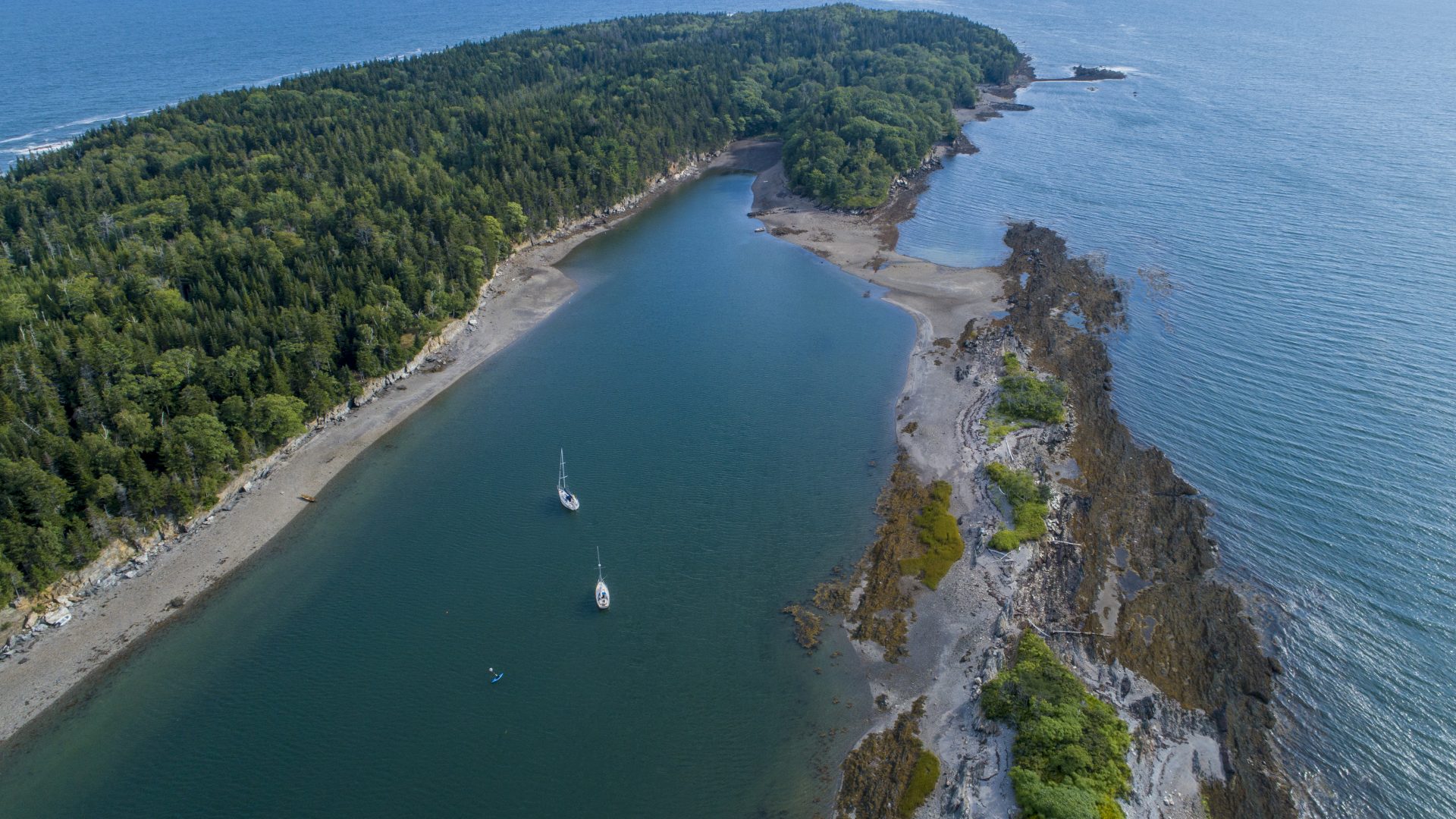
Sailboats moored in a cove on Jewell Island in Casco Bay. Portland, Maine.