Stream Conditions are Linked to Development
At a Glance
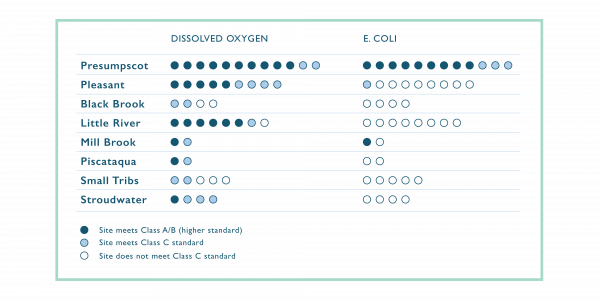
Water quality is good in the majority of the Presumpscot River, but its tributaries have frequent water quality issues.
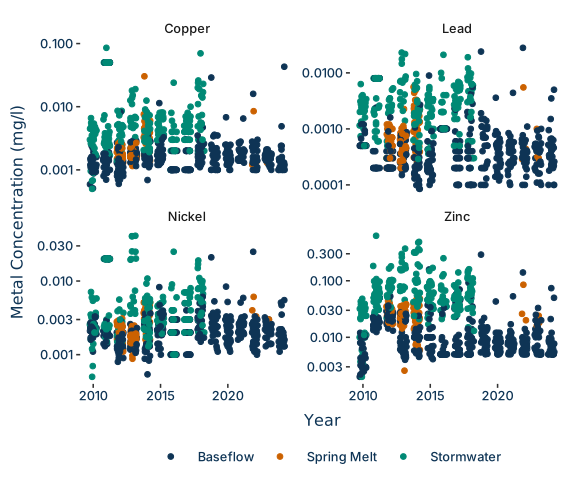
Urban development, impervious surface cover, and stormwater runoff are linked to degraded water quality.
Low dissolved oxygen and degraded macroinvertebrate communities are the most common reasons that streams in the watershed are listed as having poor water quality.
Since the 2021 Report
Stream conditions are generally similar to what we have seen in the past. Water quality in the Presumpscot River and its tributaries shows no clear signs of declines or improvements, and macroinvertebrate communities continue to be impaired in urban streams. More data on water quality in tributaries to the Presumpscot is becoming available, helping us understand how they influence conditions in the mainstem.
The health of Casco Bay is intrinsically linked to the health of its watershed. Streams and lakes from the coast into the uppermost reaches of the watershed are hydrologically and ecologically connected to the Bay.
Inland waters, including diverse stream, riparian, and wetland habitats, provide recreational and wildlife benefits but they can also transport pollutants, chemicals, and excess nutrients to the Bay. Degraded water quality reduces the biodiversity and populations of aquatic species including insects, crayfish, freshwater mussels, and fish. Migratory fish, such as river herring, rainbow smelt, and American eels, rely on healthy and unblocked waterways to travel between Casco Bay and rivers and lakes.