Chapter 9. Swimming Beaches and Shellfish Beds

Fecal Indicator Bacteria Thresholds are Being Exceeded More Frequently in Shellfish Monitoring, but Remain Steady at Beaches

The Increase in Threshold Exceedances May Be Tied to Weather

At a Glance

Fecal indicator bacteria levels are threatening shellfish harvest opportunities in Brunswick, Freeport, and Yarmouth.

Beach advisories due to bacterial presences have remained steady.

Towns are working to remediate sources of contamination that are contributing to high bacteria levels.

Since the 2021 Report

Fecal indicator bacteria thresholds for shellfish harvesting were exceeded more frequently between 2020 and 2025 than between 2015 and 2019, potentially indicating a decline in water quality. The increase in bacteria level exceedances may be partially driven by some periods with unusually high rainfall over the last few years, as frequent or heavy precipitation can mobilize fecal bacteria from upland sources and quickly transport them to the Bay. At beaches, the proportion of samples that exceed the Beach Action Value at each site has remained relatively stable.

Pollution of coastal waters by fecal bacteria can pose a health risk to humans and animals, and can introduce pathogens into the food web. People and pets who swim, wade, or accidentally ingest polluted water can suffer gastrointestinal, respiratory, or eye infections. Shellfish are filter feeders that can pick up and concentrate pathogens from their environments, so eating shellfish grown in polluted waters can expose people to high levels of pathogens and cause serious gastrointestinal disease.

While infections caused by polluted water or shellfish are typically mild, they can be dangerous for children and immuno-compromised individuals. The state of Maine monitors for pathogens by tracking Fecal Indicator Bacteria (FIB) concentrations in coastal waters through the Maine Healthy Beaches Program (under Maine Department of Environmental Protection; DEP) and the Maine Shellfish Growing Area Program (under Maine Department of Marine Resources; DMR). Higher levels of FIB indicate potential fecal contamination and increased risk of pathogen presence.

Methods used by the two agencies to track bacteria levels differ, so the numbers they report are not directly comparable. Maine Healthy Beaches collects data on Enterococcus bacteria, which is the EPA recommended FIB for marine recreational waters, and the Maine Shellfish Growing Area Program tracks fecal coliform bacteria.


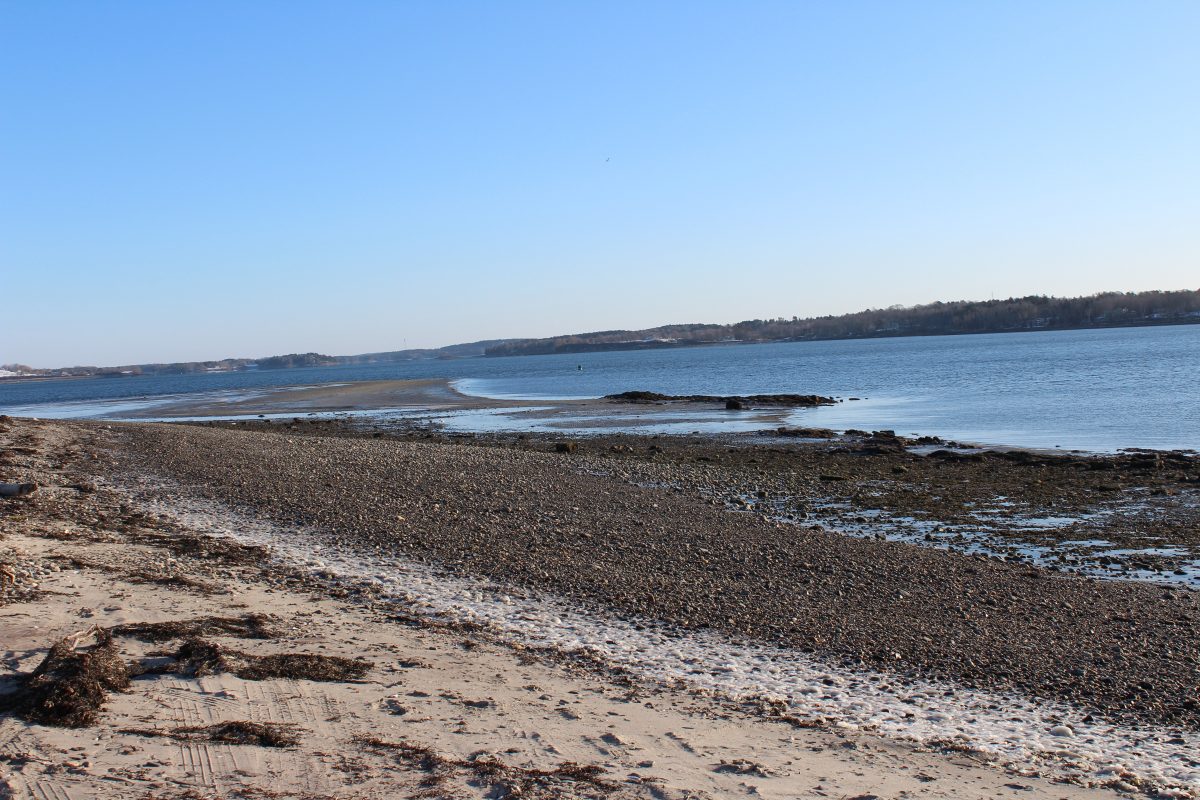
Ch. 14 Monkman beach image
Image: Jerry Monkman

How Bacteria Concentration Levels Are Measured at Swimming Beaches

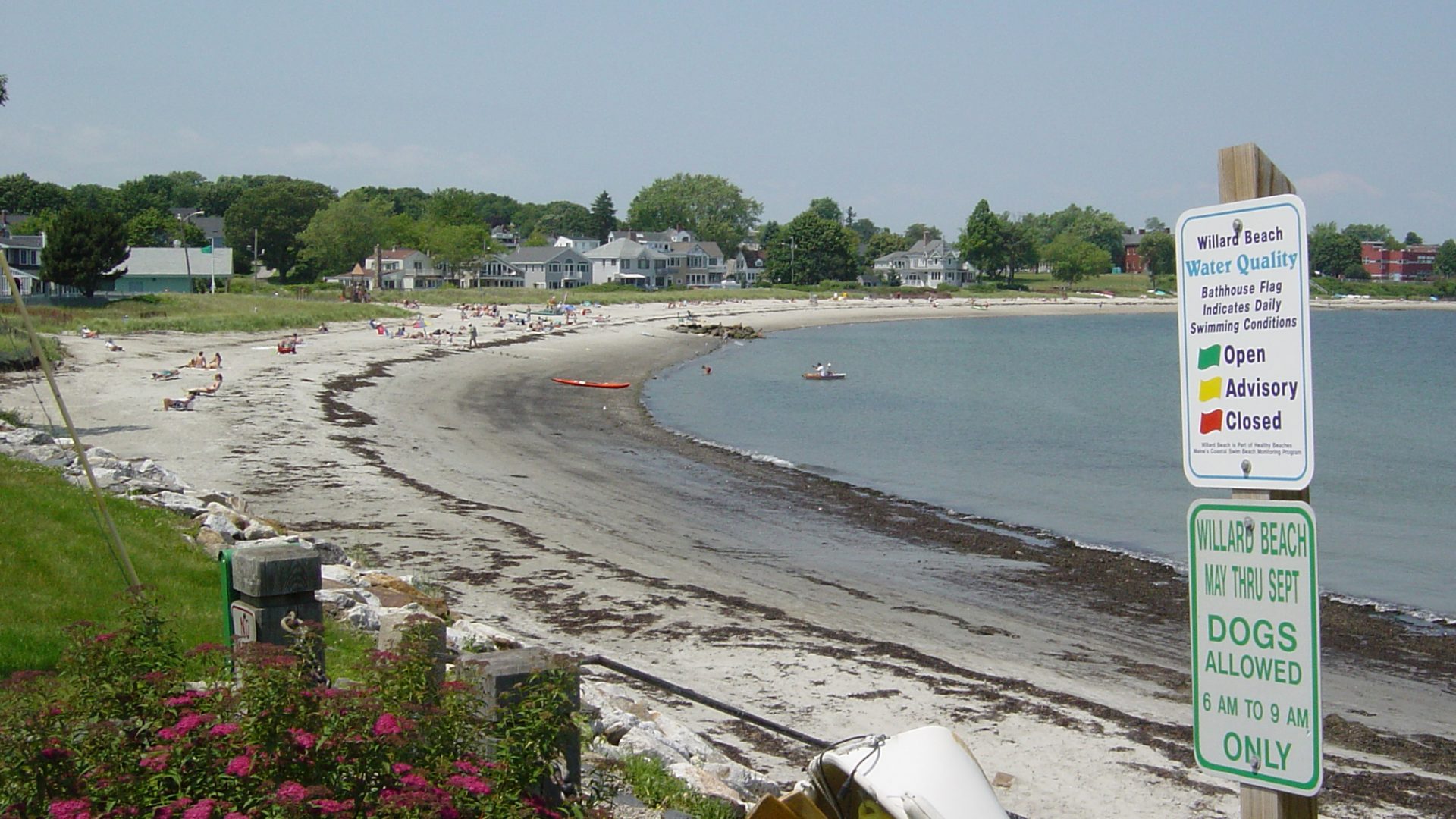
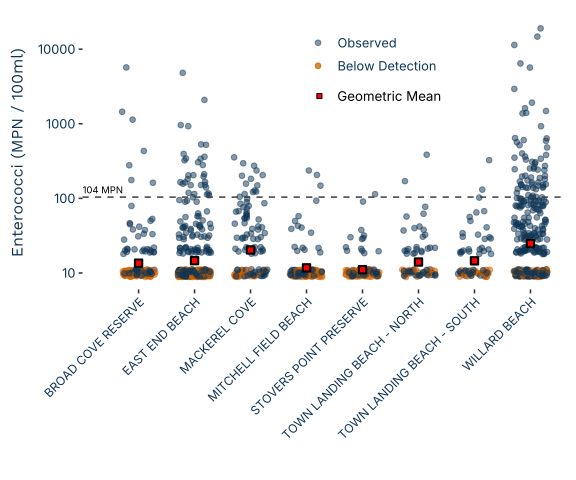
The Maine Healthy Beaches Program coordinates program participants in collecting and analyzing water samples for FIB concentration at coastal swimming beaches in the state. Bacterial concentrations above the Beach Action Value (BAV) of 104 MPN/100ml may lead to posted advisories or beach closures due to the risk of pathogen presence. Those advisories are communicated through signage at the beach  and through an online dashboard.


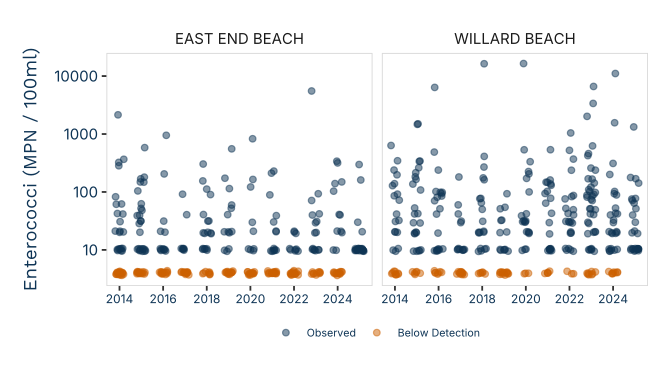
Figure 1. Concentrations of enterococci fecal indicator bacteria measured at Casco Bay beaches since 2014.

Ch. 14 Uncredited beach photo 3 from CBEP archives
Image: CBEP

Majority of Bacteria Samples at Swimming Beaches Remain Below Threshold

There are 7 sampled beaches in Casco Bay. Bacterial concentrations exceeded the Beach Action Value rarely at most beaches, with only 58 out of 727 (about 8%) of samples exceeding that value from 2021 – 2025. Willard Beach and Mackerel Cove experienced exceedances most frequently, at 20.4% and 9.0% respectively. At each site, the number of samples that exceed the BAV has remained relatively stable from year to year.

Samples are typically collected on a regular schedule with frequencies ranging from twice a week to every other week depending on the site, but are collected more following any exceedance of the BAV until samples fall below the safety threshold again. This means that how frequently samples exceed the BAV does not fully reflect how frequently water at a beach is unsafe (i.e., Willard Beach is not unsafe to swim at for 20% of the summer), but may instead indicate a higher chance of pollution events and a longer delay in returning to safe levels following an event.

Beach % of samples exceeding BAV
Willard Beach, South Portland 20.4
East End Beach, Portland 6.7
Town Landing, Falmouth 2.9
Broad Cove, Cumberland 4.2
Mitchell Field, Harpswell 1.4
Stovers Point, Harpswell 1.4
Mackerel Cove, Harpswell 9.0


Figure 2. Concentrations of enterococci fecal indicator bacteria  observed at two of Casco Bay’s most popular beaches have remained stable over time.

How Bacteria Levels Are Measured in Shellfish

The Maine Shellfish Growing Area Program classifies shellfish harvest areas as “Approved”, “Conditionally Approved”, “Conditionally Restricted”, “Restricted”, or “Prohibited”. These classifications are determined based on shoreline surveys that look for potential pollution sources and fecal coliform bacteria P90 scores (90th percentile of the last 30 values) measured in water samples collected from nearshore sites.

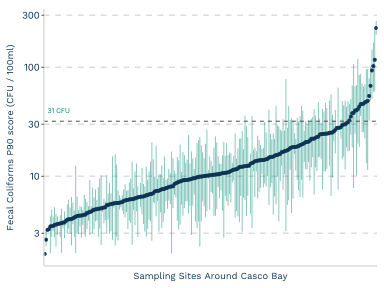
  • “Approved”, areas must have a P90 score of ≤31 colony forming units (CFU)/100 ml.
  • “Conditionally Approved” areas may sometimes exceed 31 CFU/100ml if a cause for high bacterial levels can be identified and the area can be closed when an exceedance is likely. Common types of Conditional Approval are seasonal, when harvest is not allowed between specific dates, and rainfall when harvest is not allowed after a certain amount of rainfall in a 24 hour period.

Almost all locations in Casco Bay consistently meet the P90 threshold to be approved or conditionally approved for shellfish harvest. There are some locations, including all of the southern Bay near Portland, that are permanently closed to harvest because of proximity to possible pollution sources such as wastewater treatment facilities, combined sewer overflows, or overboard discharges.

Figure 3. The average P90 score and range of P90 scores from 2015 – 2025 for all Shellfish Growing Area Program sampling sites in Casco Bay. Nearly all sites are consistently below the 31 CFU/100 mL threshold to be approved for harvest.

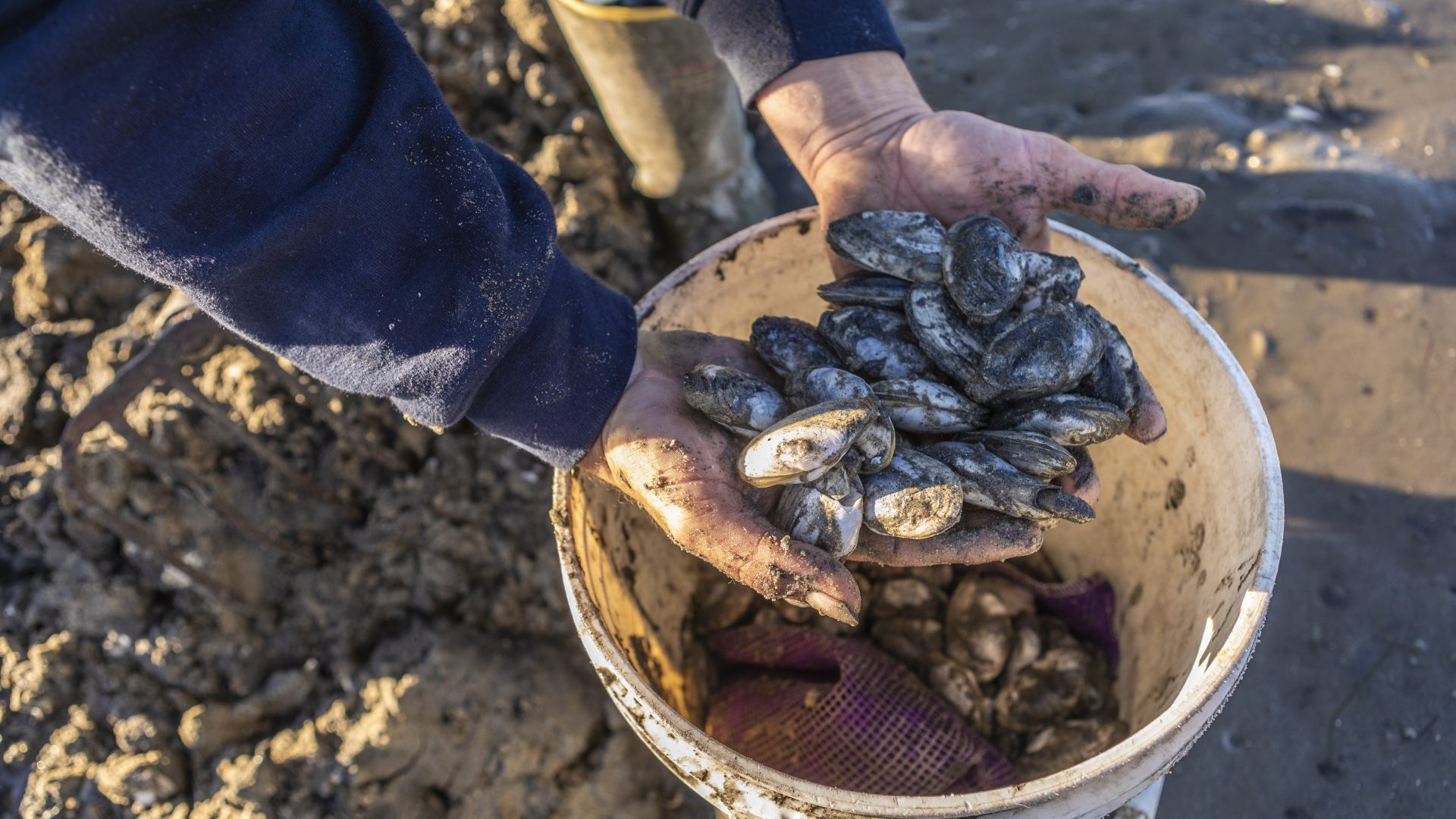
A man digs for clams in a mudflat in Brunswick, Maine.
A man digs for clams in a mudflat in Brunswick, Maine. Photo: Jerry Monkman

Increase in Bacteria Exceedances at Sites Approved for Shellfish Harvest

Over the last five years there has been an increase in the number of harvestable areas with P90 scores that occasionally exceed the 31 CFU/100 ml threshold. From 2015 to 2019 there were 13 sites that exceeded the threshold at least once, and from 2020 to 2025 there were 36 sites. Many of the sites that have begun to exceed the P90 threshold are clustered together, with clusters in coves in Harpswell, Upper Maquoit Bay in Brunswick, Wolfes Neck in Freeport, and near Cousins Island and Broad Cove in Yarmouth/Cumberland. All of these locations have been reclassified from Approved to Conditionally Approved in recent years.

The increase in P90 exceedances may represent water quality threats from sources including failing septic tanks, increased boat traffic, and shoreline development. Frequent or heavy precipitation  can also trigger high Fecal Indicator Bacteria levels as the stormwater runoff mobilizes upland fecal materials and quickly transports them to the Bay. Unusually wet summers in some recent years may also have contributed to the increase in exceedances.

Perch to add updated map for shellfish exceedences

Mackworth Island
(Image: CBEP)

The Future of Shellfish Harvesting

The reclassification of multiple areas from Approved to Conditionally Approved since 2020 has potential economic impacts, as it restricts the locations and time of year when commercially important shellfish species can be harvested. More frequent heavy precipitation events (see Climate Change chapter) and increasing development and impervious cover can increase the risk of elevated Fecal Indicator Bacteria levels, and are likely contributing to the increase in exceedances. Despite this, water quality in Casco Bay remains generally good and the majority of shellfish harvesting areas continue to meet water quality thresholds and areas with FIB exceedances are highly localized.

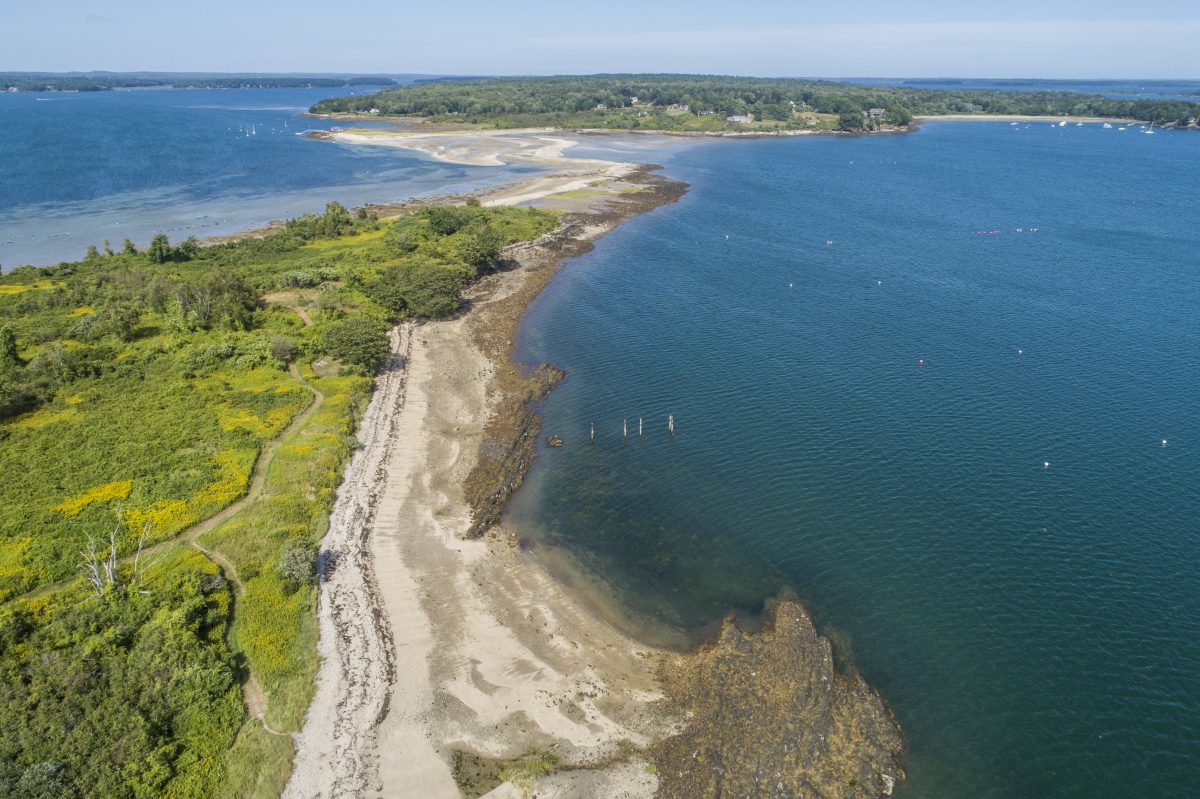
Little Chebeague Island is connected to Chebeague Island (top) by a sand bar at low tide. Portland, Maine.
Little Chebeague Island is connected to Chebeague Island (top) by a sand bar at low tide. Portland, Maine. (Image: Jerry Monkman)

Sample Collection Schedule May Not Allow for Understanding Long-Term Trends

Fecal coliform samples in shellfish growing areas are collected six times during the year, roughly every two months on randomly determined days. Enterococcus at beaches is measured once a week from Memorial Day to Labor Day, and sometimes more frequently after rain events. These sampling schedules can make it difficult to evaluate long-term trends or determine causes for water quality declines.

LOOKING AHEAD TO 2030

Towns are working to understand and address the causes of water quality declines in their waters. The City of South Portland is working to remediate old sewer pipes that may be contributing to high bacteria levels at Willard Beach, and the Town of Brunswick is searching for failing septic systems along its coast that could be polluting shellfish harvest areas. Identification of contamination sources, infrastructure improvements, watershed protection, and continued monitoring will remain important for identifying and mitigating emerging problems and protecting water quality for beach goers and shellfish.