Chapter 17. Living Marine Resources

Living Marine Resources Remain an Important Part of Casco Bay’s Culture

They Also Contribute Millions of Dollars a Year to the Economy of Casco Bay

At a Glance

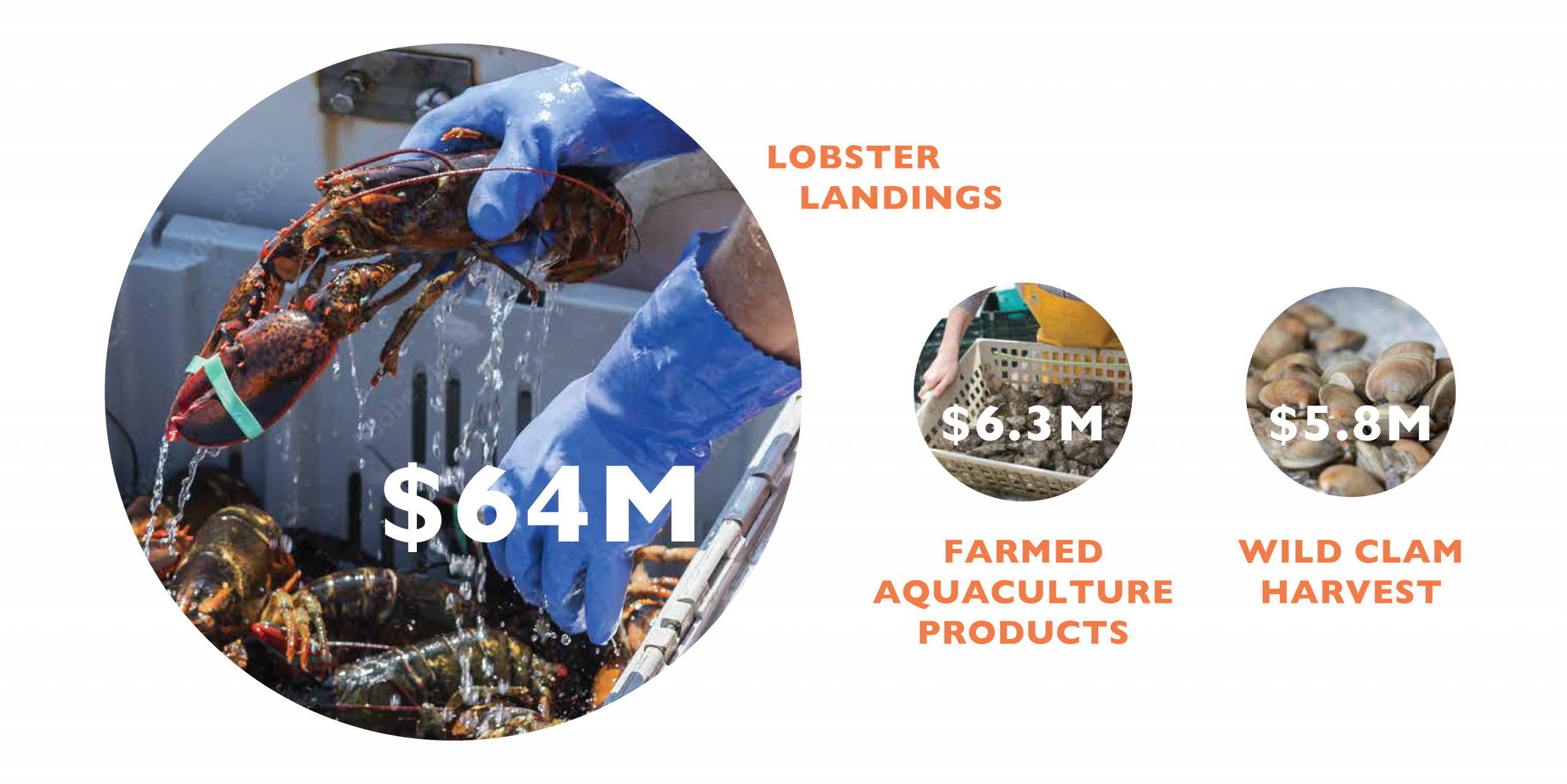
In 2025, farmed aquaculture products ($6.3 million), wild harvest of clams ($5.8 million), and lobster landings ($64 million) contributed an estimated $76 million to the economy of Casco Bay communities.

Aquaculture in Casco Bay is increasing steadily, while clam harvests and lobster populations have both shown dips or declines in recent years.

While the total lobster population may have declined, the stable or slightly increasing trends of lobster settlement provide a tentatively positive outlook for the health of lobster populations in Casco Bay.

Since the 2021 Report

This chapter was not included in the 2021 State of Casco Bay report, but has been added here as more relevant data has become available.

Fisheries are intrinsically linked to the history, culture, and economy of Maine’s coast. Maintaining the ecological and economic health of harvestable living resources goes hand in hand with maintaining the health of Casco Bay’s coastal communities. Lobster is the most valuable fishery in the state by an order of magnitude, but wild clam harvest and marine farming (aquaculture) have each contributed $20 – $25 million to the state’s economy on an annual basis in recent years.

The Maine Department of Marine Resources (DMR) is responsible for tracking and managing the fishing and harvesting of these living marine resources. The information in this chapter largely comes from data they collect and share, supplemented by lobster larval settlement data from University of Maine.
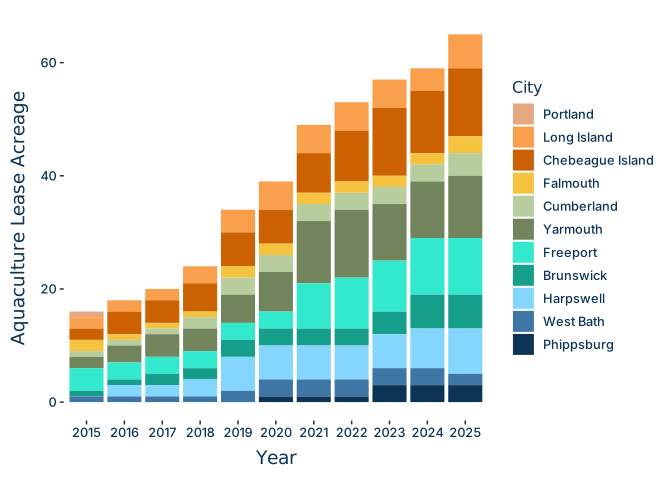
Increase in Aquaculture Leases

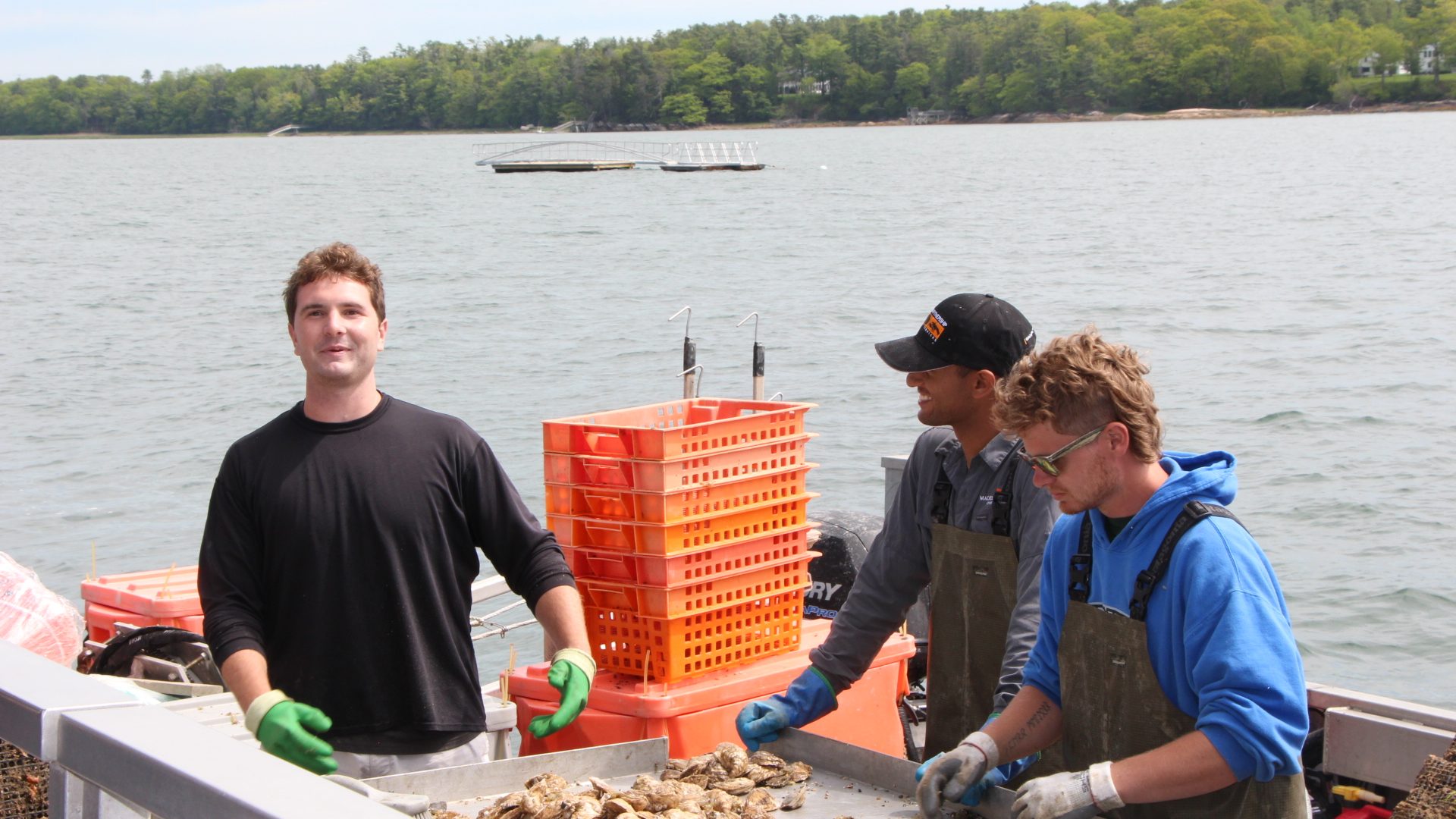
Over the past decade the acres of area leased for aquaculture in Casco Bay have more than tripled, with the largest increases seen in the waters of Brunswick, Freeport, Yarmouth, and Chebeague Island. Every Casco Bay town except for Phippsburg has seen an increase in aquaculture leases in their waters since 2015.

Leases are generally small with an average size of 5.3 acres. Only 7 active leases in Casco Bay have a footprint greater than 10 acres, and all are far below DMR’s maximum allowed size of 100 acres. The majority of aquaculture is oyster farming, but there are currently approximately 30 acres devoted primarily to mussels and 80 acres focused on kelp. Mussel and kelp farming is most common in the central bay across the towns of Falmouth, Cumberland, and Chebeague Island.

In addition to aquaculture leases, there are currently 249 commercial and recreational limited purpose aquaculture sites (LPAs) in Casco Bay, held by 106 different owners. LPAs have a maximum size of 400 ft2 and combined add 2.2 acres to the footprint of aquaculture in Casco Bay.

Ch. 11 CBEP Bangs Mussels

Soft Clam and Hard Clam Harvests Show Opposite Patterns

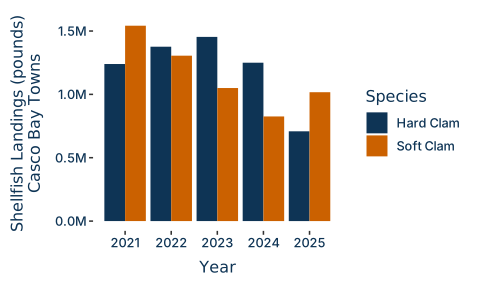
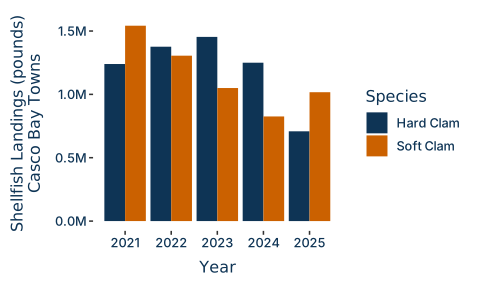
Soft clam (softshell clams) and hard clam (surf clams and quahogs) harvests typically follow opposite patterns: an increase in the harvest of one is seemingly mirrored by a decrease in the harvest of the other.

This may be related to the effects of temperature on invasive European Green Crabs, which are voracious predators of soft clams. Colder years drive down green crab populations, resulting in more soft clams available for human harvest, while warmer years and increased green crabs may favor growth and harvest of the more predation-resistant hard clams.

Harpswell and West Bath harvest mostly hard clams, while Freeport and Phippsburg harvest mostly soft clams. Brunswick has the highest clam landings in Casco Bay and is the only town that harvests large numbers of both soft and hard clams. DMR’s reporting of landings has improved in recent years, but detailed data on landings by town, or even county, for individual species can still be difficult to find.

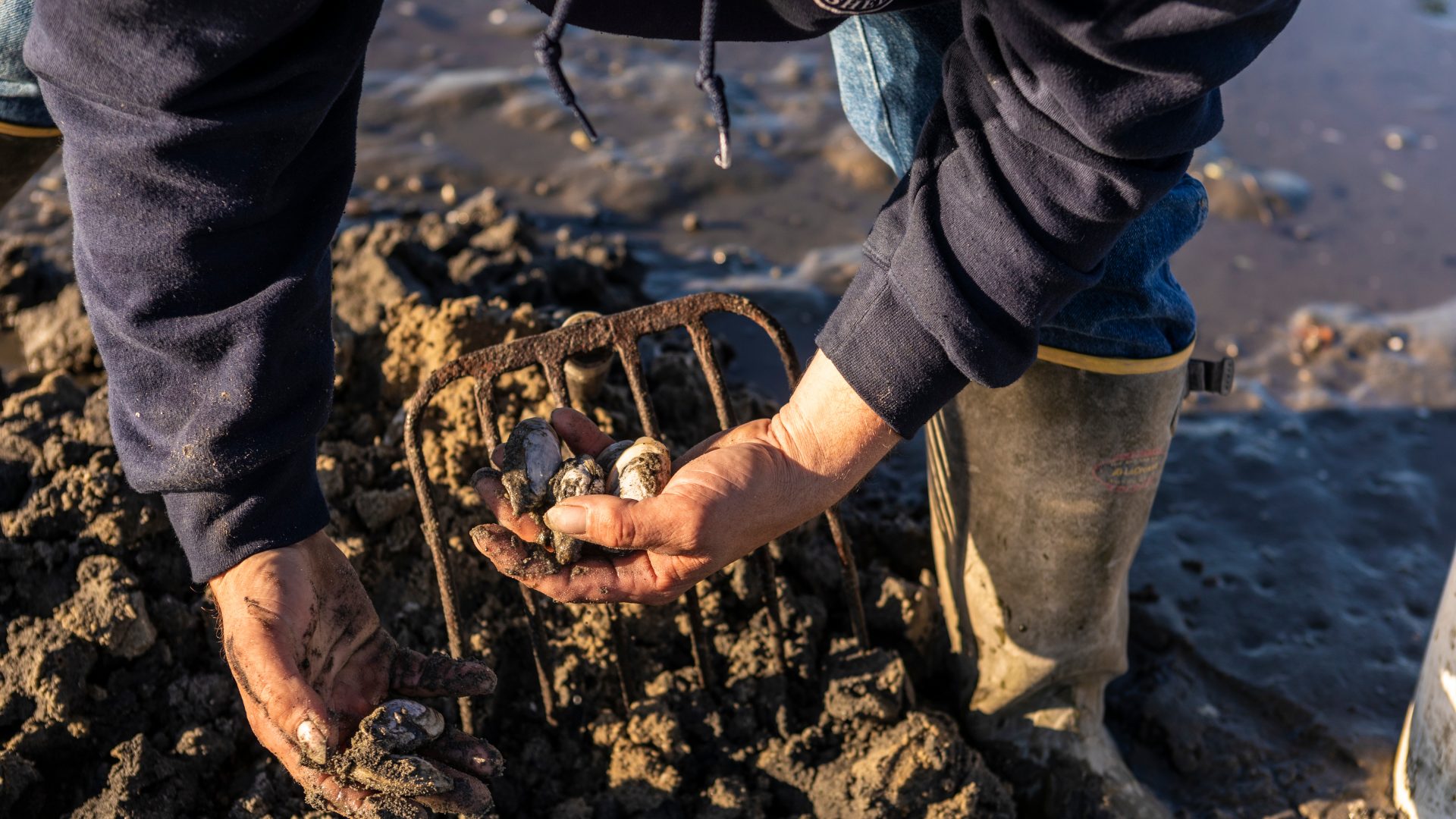
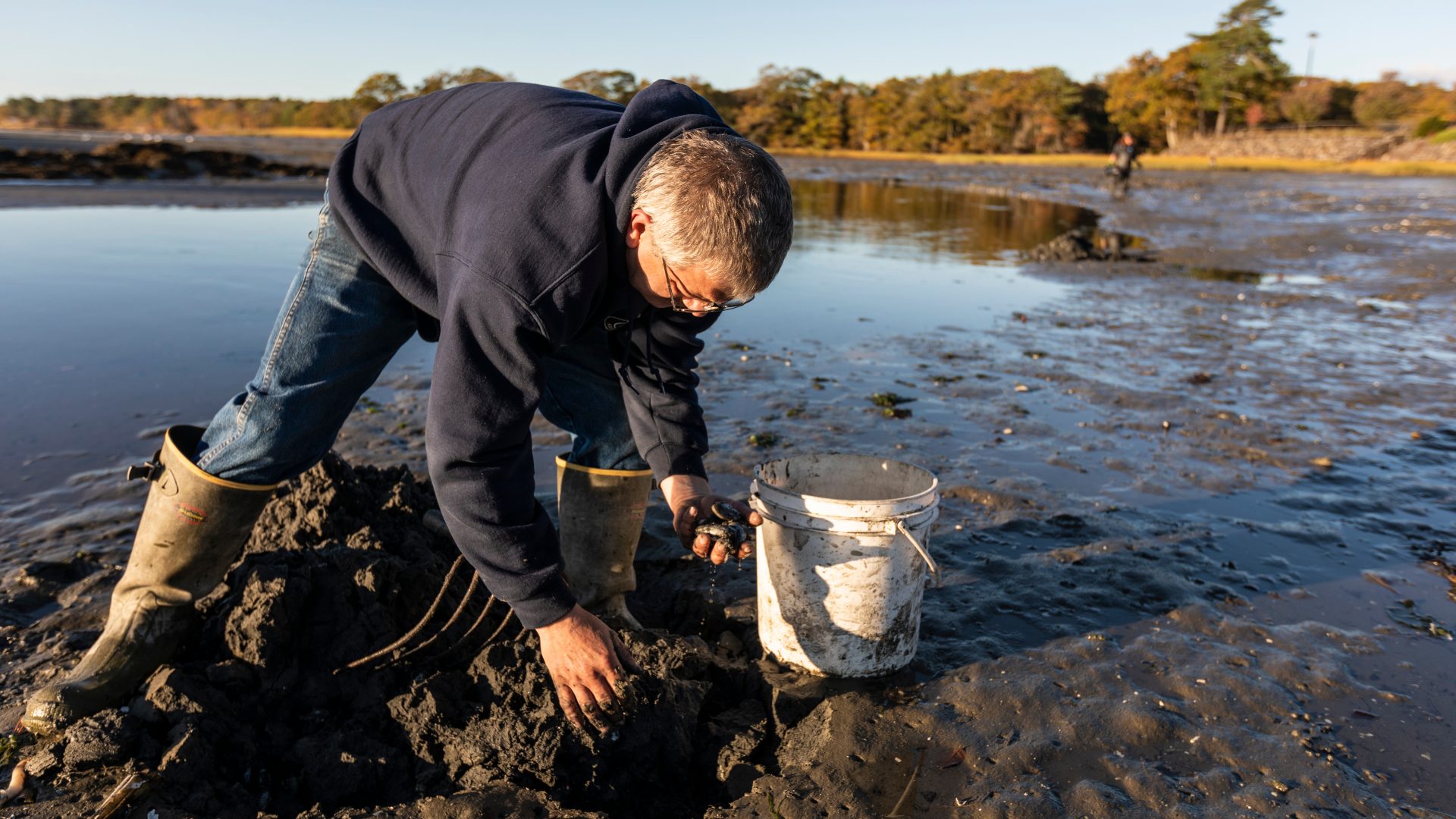
A man digs for clams in a mudflat in Brunswick, Maine.

Lobster Populations May Be Migrating to Deeper Waters

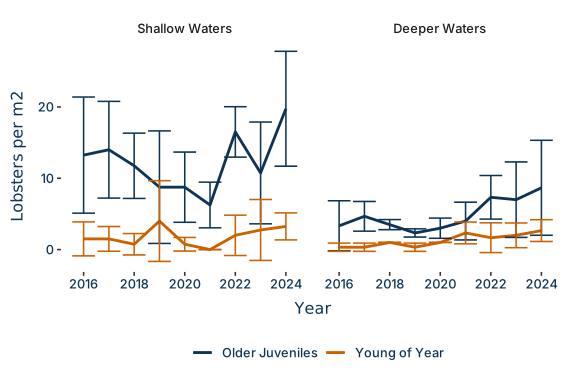
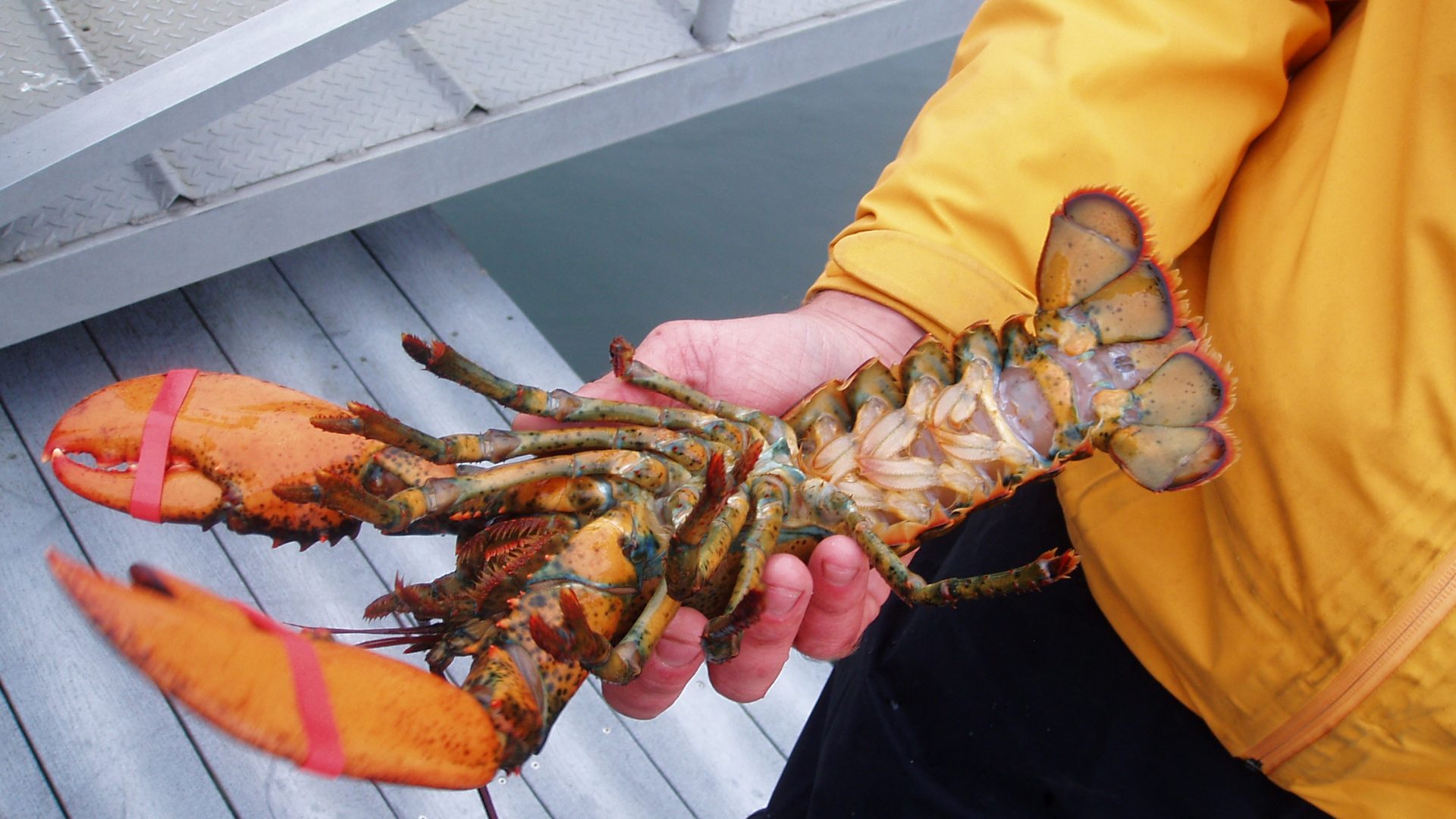
Through a science-industry collaboration,University of Maine researchers have been deploying collector cages to survey juvenile lobster populations annually since 2016. Collectors are deployed in shallow waters (0 – 20 meters deep) and deeper waters (21 – 40 meters deep).

Settlement of young-of-year lobsters and presence of older juveniles in Casco Bay has slightly increased over the last decade, but only in deeper waters. Juvenile and young of year presence in shallow waters remains steady, and juvenile presence is highest in shallow waters. Young of year settlement was historically highest in shallow waters, but since 2021 settlement in deeper waters has regularly approached or exceeded those levels. This suggests that lobster populations may be shifting into progressively deeper habitats, possibly in response to increasing water temperatures.

Ch. 16 lobster5
Cecilla Talopp/Marine Photobank

Abundance of Lobsters in Decline

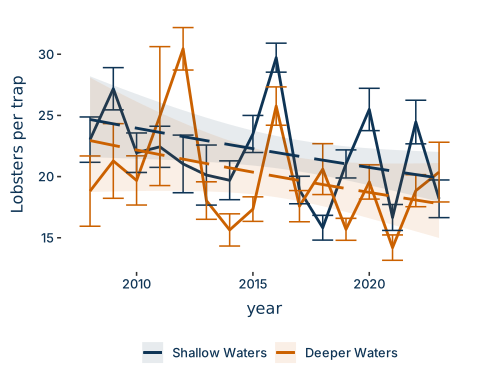
DMR has conducted ventless trap surveys since the mid-2000s. These surveys sample the entire lobster population and are an important source of data on juvenile and sublegal lobsters in particular. Over the survey period, the average abundance of lobsters (of all sizes combined) in both shallow and deeper waters of Casco Bay has shown a declining trend, despite some peaks in the mid-2010s.

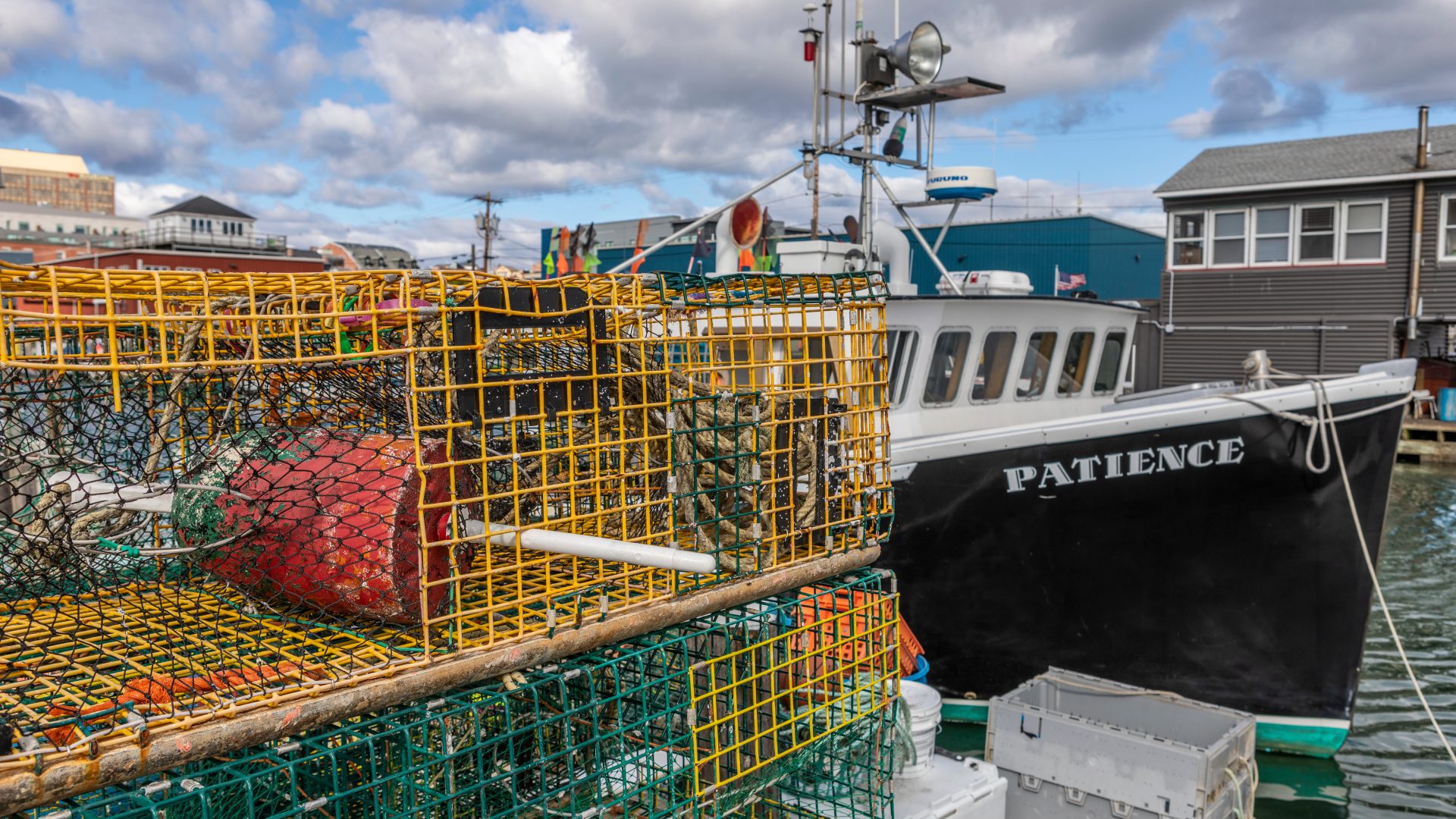
Fishing boats docked on Union Wharf in Portland, Maine.

Value of Lobster Landings Remains High

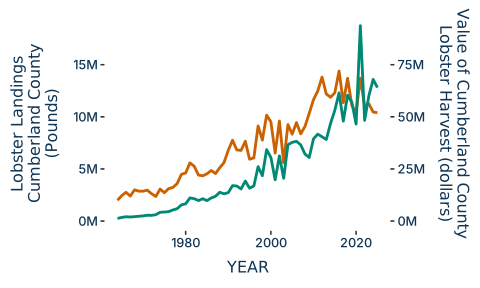
While the value of lobster landings in Cumberland County is down from the recent high in 2021, it remains higher than in recent history, despite declines in landings. The average prices per pound of lobster in 2024 and 2025 were, respectively, only $0.34 and $0.67 below 2021 prices. Approximately 12% of the total lobster catch in Maine is landed in Cumberland County on an annual basis. This includes lobsters that may be caught outside Casco Bay but are landed in a Casco Bay town.

LOOKING AHEAD TO 2030

Efforts to collect and share data on Maine’s living resources are continuing to evolve. Maine’s Department of Marine Resources has recently updated their reporting dashboard and is making data on commercial landings more accessible.

In future reports we hope to have the data to include additional living resources, such as ground fish, eel, and alewife.

A man digs for clams in a mudflat in Brunswick, Maine.