Watershed Land Area Classified as "Forested" Continued to Decline
At a Glance
Loss of forest lands puts wildlife populations at risk, reduces recreation opportunities, and threatens our waters. Healthy streams, rivers and lakes depend on healthy forests.
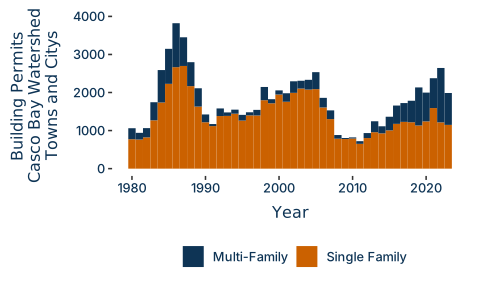
Single family building permit applications increased through the COVID-19 pandemic and beyond, indicating a hot housing market.
How we plan and build to accommodate growing populations in the region will determine the health of urban and suburban streams.
Since the 2021 Report
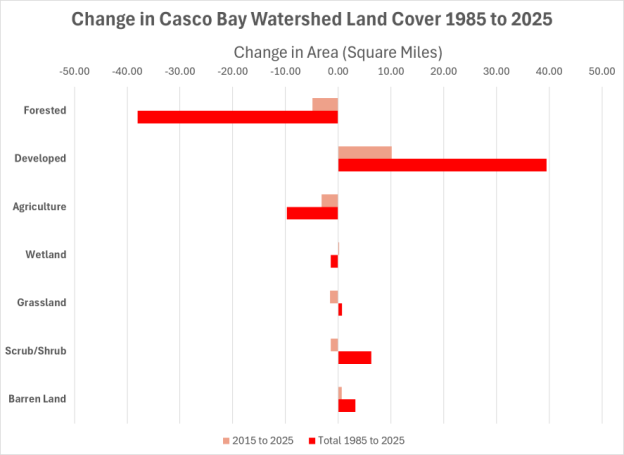
The population of Maine and the Casco Bay watershed continues to increase, driving changes in land use. Watershed land area classified as “forested” continued to decline, with the net loss in forest cover between 2020 and 2025 estimated at 2.1 square miles. Watershed land area classified as “developed” increased, over the same period by 4.6 square miles. Agricultural lands also continue to decline.
Maine is the second fastest growing state in New England and ranked 25th in the country for population growth on a percentage basis. In 2025 a record high population was reached, estimated at 1,414,874, and over a quarter of the state’s population lives in the Casco Bay watershed.
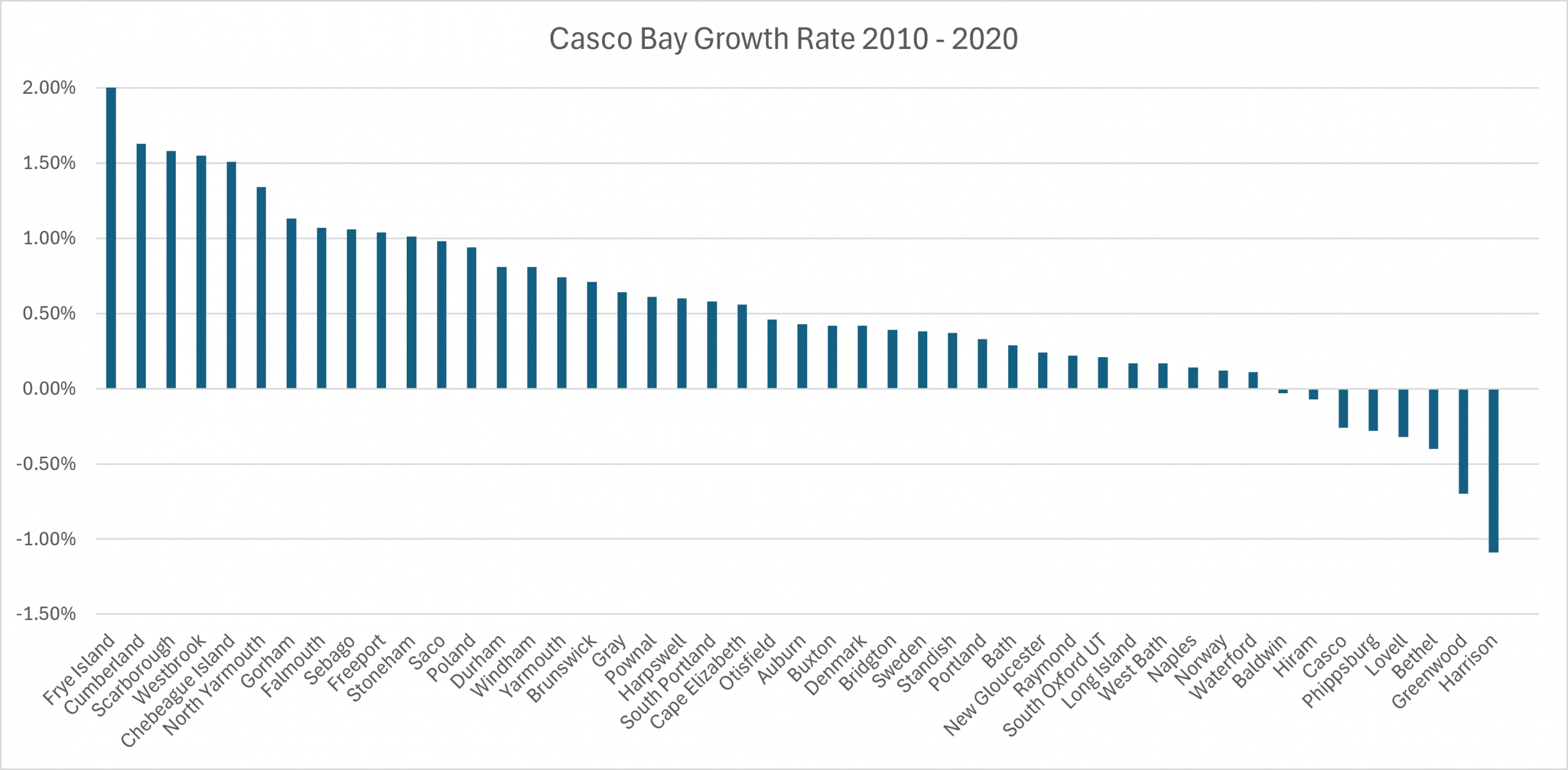
Based on population growth rates calculated from the most recent available census data (2010 and 2020), the fastest growing municipalities in the watershed are largely the towns surrounding Portland, but not Portland itself. Broad social and economic trends, including population growth, contribute to changing patterns in where people work and live in the Casco Bay region and, in turn, the intensity of human impacts.
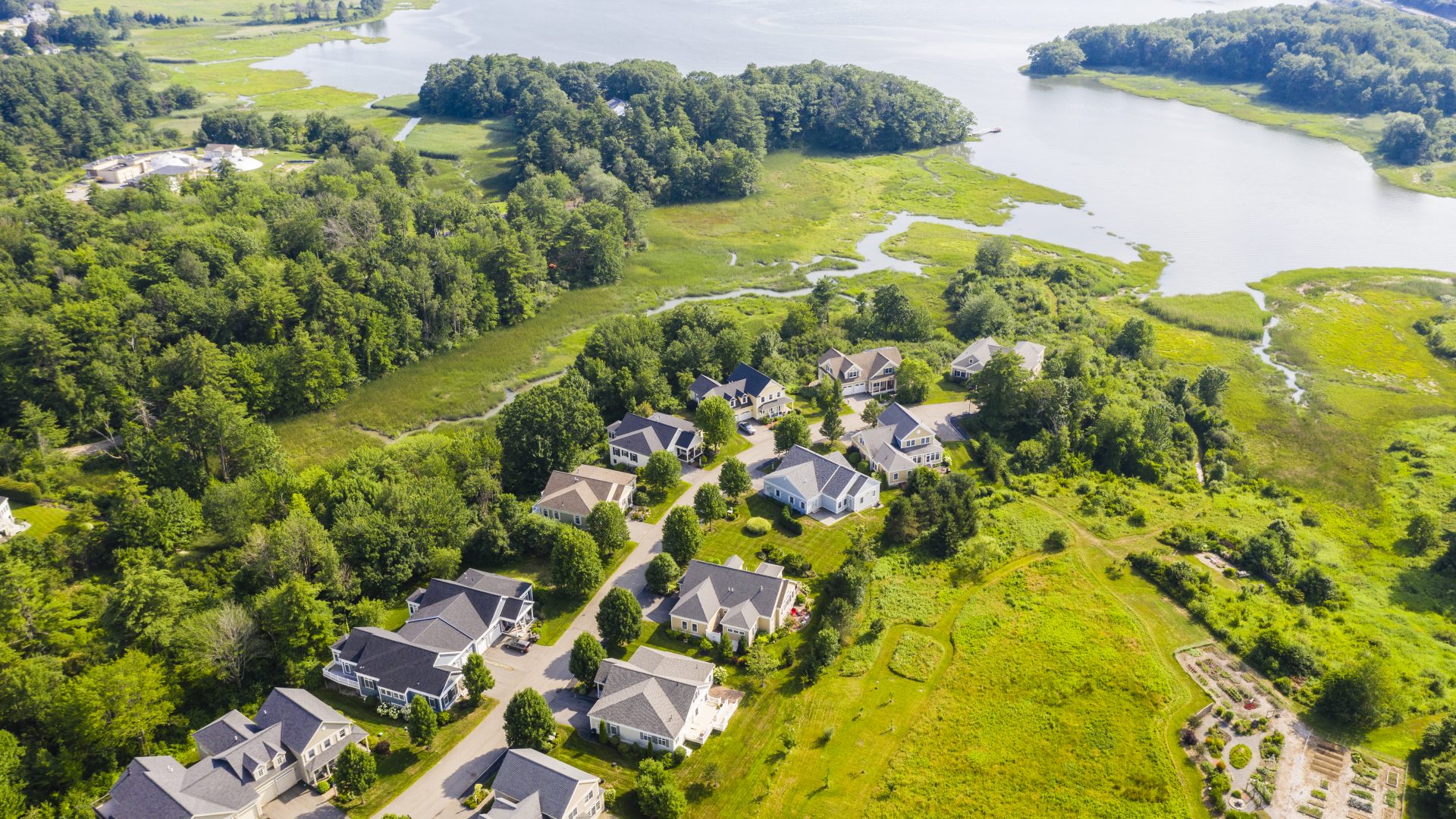
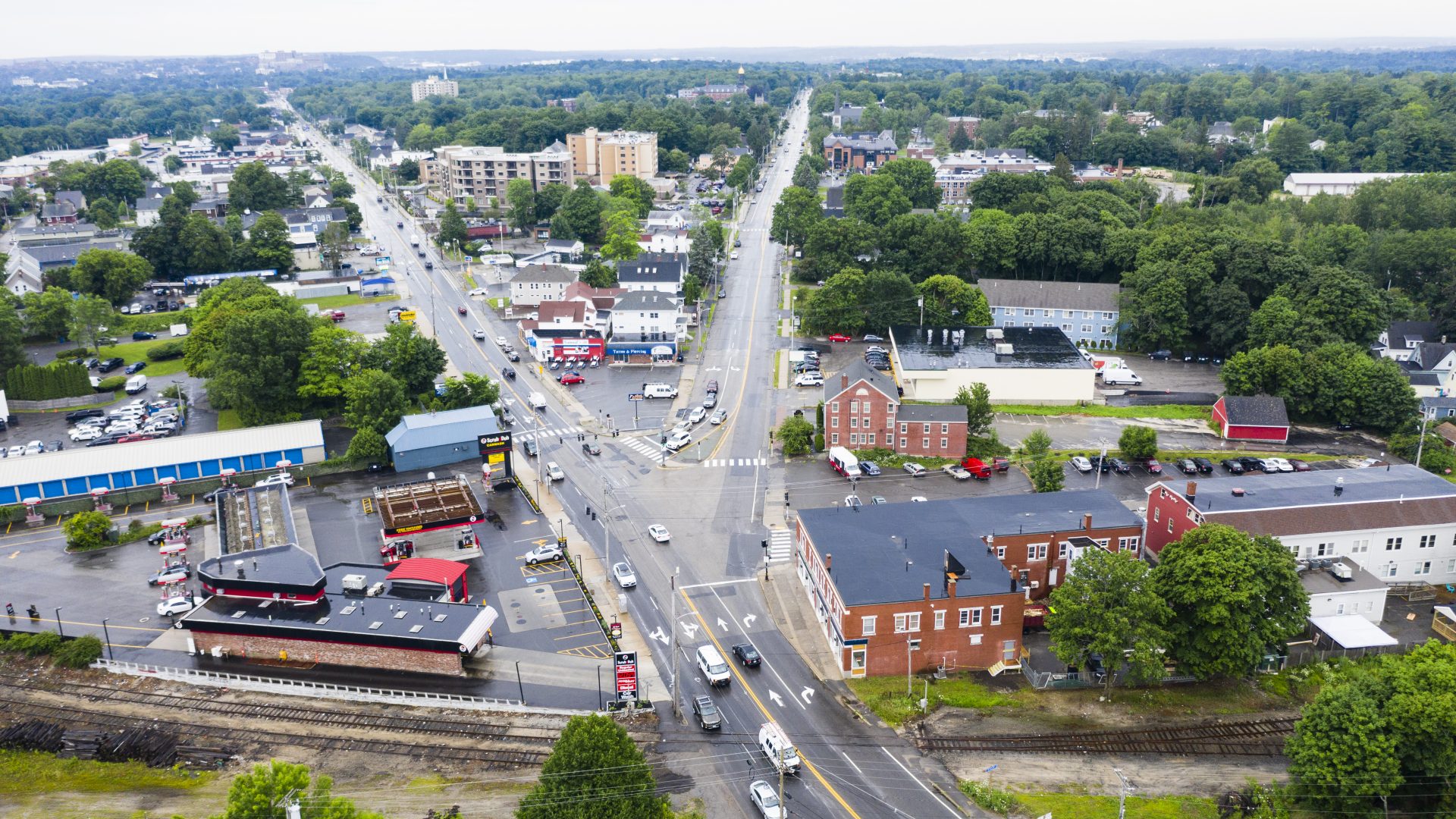
Many environmental stressors affecting the Bay stem from changes in land use in the watershed, particularly loss of forests and the conversion of undeveloped areas to roads, buildings, parking lots and driveways. Suburbanization, or increased development on the outskirts of urban centers, in the region contributes to degraded aquatic ecosystems, fragmentation of large undeveloped areas, loss of access to open space, and declines in fish and wildlife habitat.
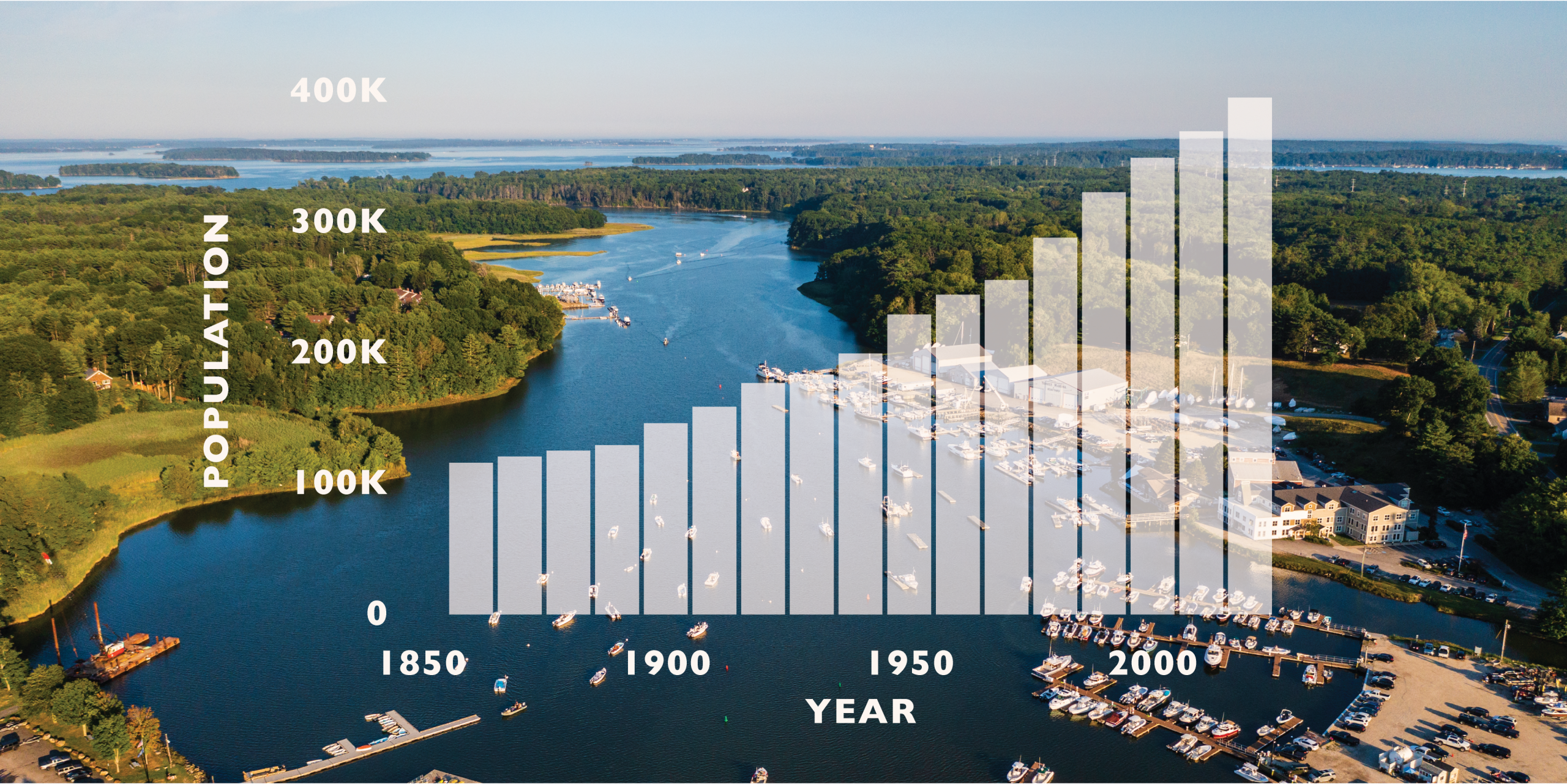
The population in Casco Bay has been steadily increasing since the mid 1800s.