PFAS Compounds are Ubiquitous in Casco Bay’s Waters and Marine Life
At a Glance
Concerns about PFAS have sparked an increase in sampling. At the same time, the state has stopped collecting data on PAHs and PCBs.
The August 19, 2024 AFFF spill in Brunswick caused a major contamination event.
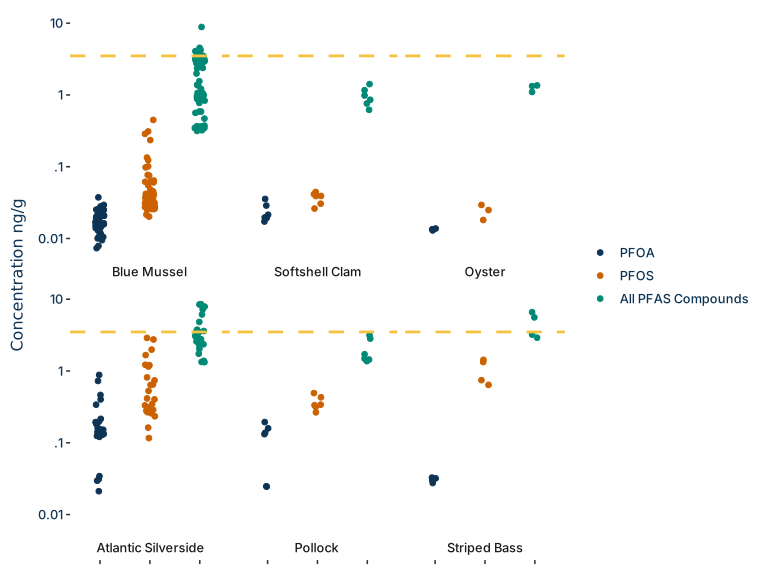
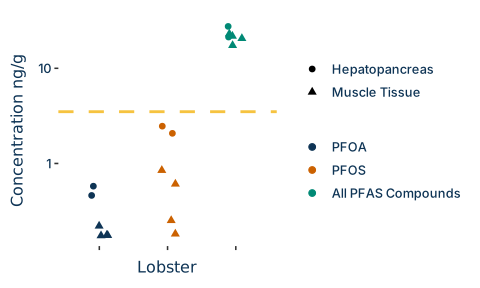
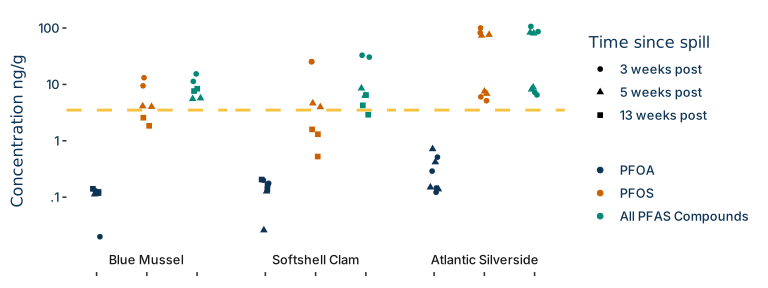
13 weeks after the spill PFAS concentrations in water had generally returned to background levels, but remained elevated in fish and shellfish tissue.
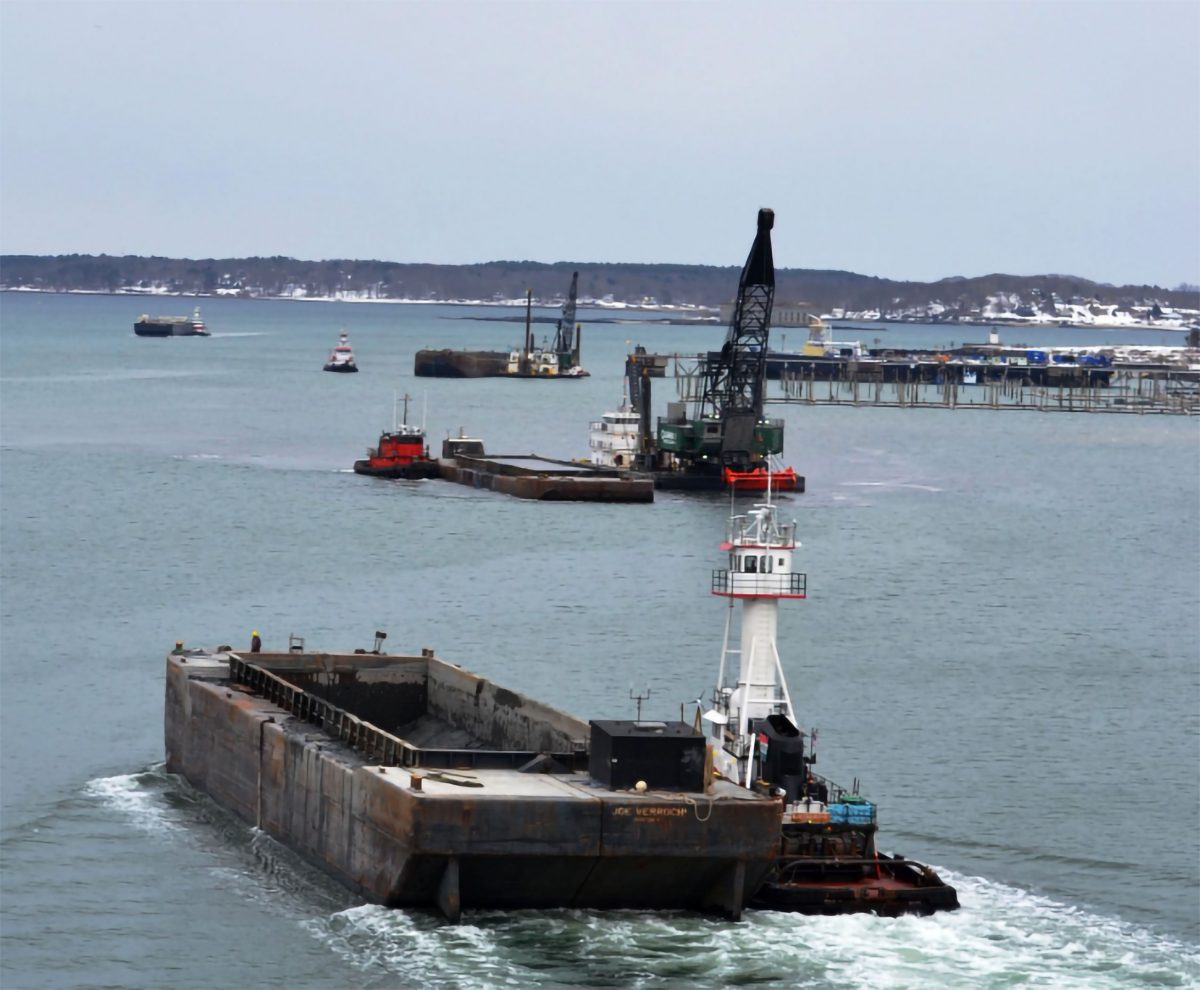
The newly constructed CAD Cell in Portland Harbor is allowing removal of sediment with legacy contamination from the harbor.
Since the 2021 Report
PFAS has emerged as a topic of concern for both the general public and resource managers, and in response there has been a sharp increase in sampling for PFAS. This has provided an abundance of new information on the spatial and temporal variation in PFAS contamination along with concentrations of PFAS in the tissues of numerous marine species. The state has not collected data on PAHs, PCBs, and metals in blue mussels since 2017 however, so we are not able to report an updated trend for these contaminants. Since 2020, a solution has also been found to the legacy contamination in the sediments of Portland Harbor. After decades of planning, a Confined Aquatic Disposal (CAD) cell was constructed in Portland Harbor in winter 2024 as a way to permanently contain contaminated sediments.
Toxics are biologically active compounds that have been released into the environment by humans and are known to cause harm to humans or the environment. Some persistent toxic compounds, such as PCBs and DDT, have been largely phased out and environmental concentrations are slowly declining. Areas with industrial history can have high levels of these compounds built up in the environment, which is referred to as legacy contamination.
While many legacy contaminants have been phased out or banned, new compounds are constantly being developed and it often takes years to realize the persistence or impacts of compounds. PFAS stands for per- and polyfluoralalkyl substances, and is a group that encompasses numerous long-lasting synthetic chemicals of potential water quality and health concern. Different PFAS compounds are produced by different sources, and some PFAS compounds are of higher levels of concern than others. Perfluorooctanoic Acid (PFOA) and Perfluorooctane Sulfonate (PFOS) are two of the most well-studied and commonly measured PFAS compounds.