Chapter 3. Combined Sewer Overflows

New Back Cove South Storage Facility is Predicted to Cut Combined Sewer Overflow (CSO) Discharge in Half

CSO Discharge Decreases at 15 Outfalls and Increases at One

At a Glance

Portland, South Portland, Westbrook, and Cape Elizabeth have active, permitted, CSOs.

Portland has the most permitted CSO outfalls in the region, with 24 permitted as of the end of 2024, down from 43 in the mid-1990s.

All but one of Portland’s remaining CSO sites has either decreasing or stable discharges.

A new storage facility in Portland’s Back Cove will substantially reduce CSO discharges.

Since the 2021 Report

CSO discharge volumes at some of Portland’s most significant CSO outfalls have dropped sharply as a result of the construction of the new Back Cove Storage South Facility. In the 5 years prior to 2020, the three CSO outfalls with the greatest discharge volumes were at Preble Street, Franklin Street, and Mackworth Street on the edges of Back Cove. The outfall at Mackworth Street was closed in 2022 and flows from Preble Street and Franklin Street are now being captured by the Back Cove South Facility, greatly reducing CSO output to the waters around Portland. The highest remaining discharges are now at the Maple Street and Northeast Pump Station outfalls. Discharges have also continued to decline in South Portland and Westbrook.

Combined Sewer Overflows, or ‘CSOs’, occur during and after large rain events when large volumes of stormwater enter the combined sewer systems and cause discharge of a mixture of stormwater and untreated sanitary waste to nearby waters.

More than half a century ago stormwater and sewage were collected in the same pipes and would discharge directly into Casco Bay or its rivers. The construction of modern wastewater treatment facilities and the separation of combined sewers have reduced CSO discharges, but switching from combined sewer infrastructure to separate wastewater and stormwater collection systems is difficult and expensive. With large storm events, combined sewers can still take on enough stormwater to overflow and discharge at certain outfalls. Snowmelt and frozen ground also contribute to high discharges during winter and early spring storms. Sewer separation redesign and underground holding tanks are two strategies that have been deployed by towns in the Casco Bay watershed to decrease and in some cases eliminate these discharge events.
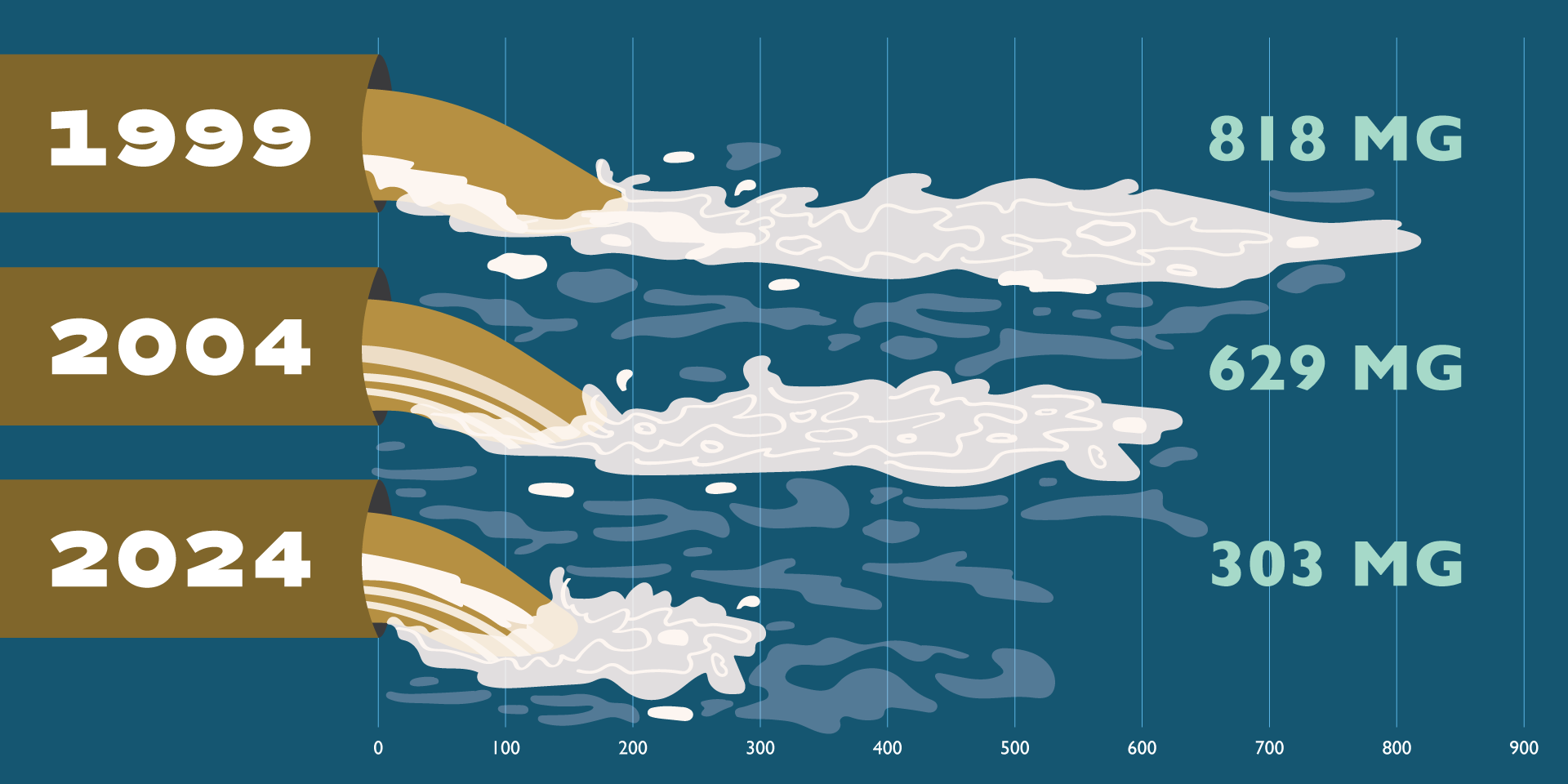
 

Figure 1. The number of millions of gallons discharged from CSO outfalls from 1999 to 2024.
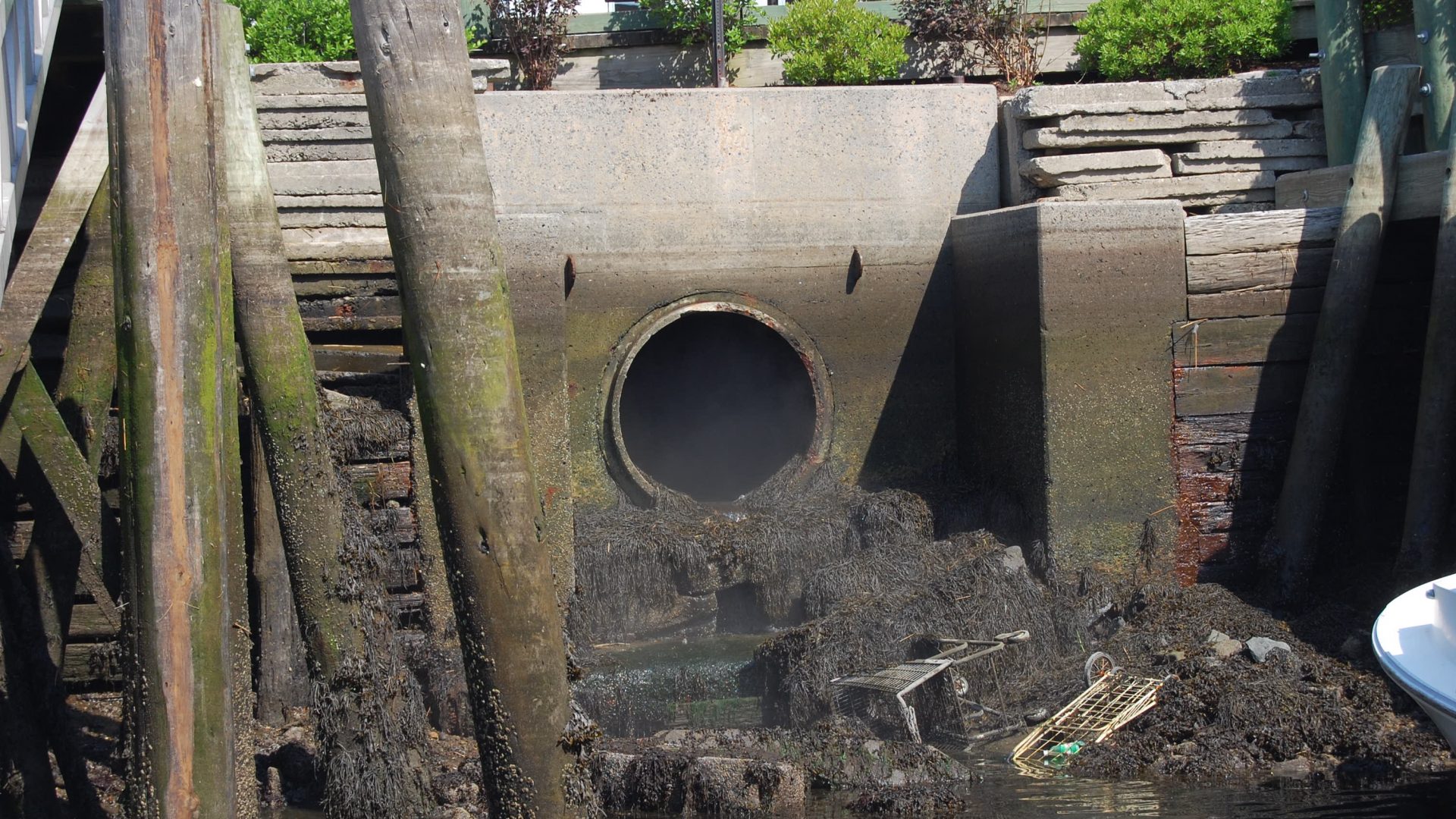
Buoy Park CSO

CSO Discharges in Decline

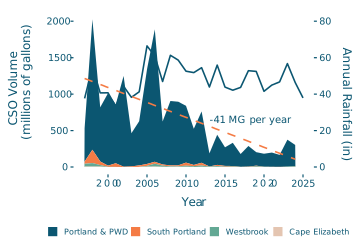
Fhe cities of Portland, South Portland, Westbrook, and Cape Elizabeth have active, permitted, CSOs. CSO discharges from these cites combined have remained below 500 million gallons (MG) per year in recent years. Discharges have declined, on average, 41 MG per year since 1997. Portland had 43 permitted CSO outfalls in the 1960s. Nineteen were permanently closed by the end of 2024, leaving 24 remaining. Of the remaining outfalls, discharges since the 1990s have declined significantly at 15 outfalls and increased at only one (Maple Street).

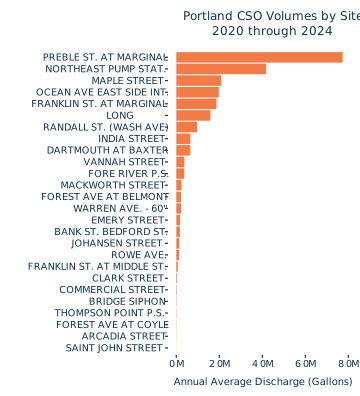
From 2020 to 2024, six CSOs had an annual average discharge greater than 10 MG: Preble Street at Marginal, Northeast Pump Station, Maple Street, Ocean Ave East Side, Franklin Street at Marginal, and Long Wharf. Together, these made up for about 194.3 MG of average annual discharge and accounted for about 80% of the overall average discharge in Portland. The outflows from Preble Street at Marginal and Franklin Street at Marginal are now being captured by the new Back Cove South Storage Facility. Maple Street, which has an increasing discharge trend, and the Northeast Pump Station outfall, which has had higher than normal discharges in recent years, are now the outfalls with the greatest annual discharge. The City of Portland is actively making improvements and seeking solutions to decrease discharges at both locations.

Figure 2. CSO Total Discharges by town and compared to annual rainfall.

Figure 3. Recent average discharge at remaining CSO outfalls in the City of Portland over the most recent five years for which data was available.

Perch to rebuild “output trends” map

Figure 4. Portland CSO Outfall trends by location

Baxter Blvd. CSO conduit.

Portland's Progress on CSO Remediation: Back Cove South Storage Facility

The new Back Cove South Storage Facility is helping cut the city’s CSO discharge in half. The city began this project in 2022 and completed the installation in 2025.

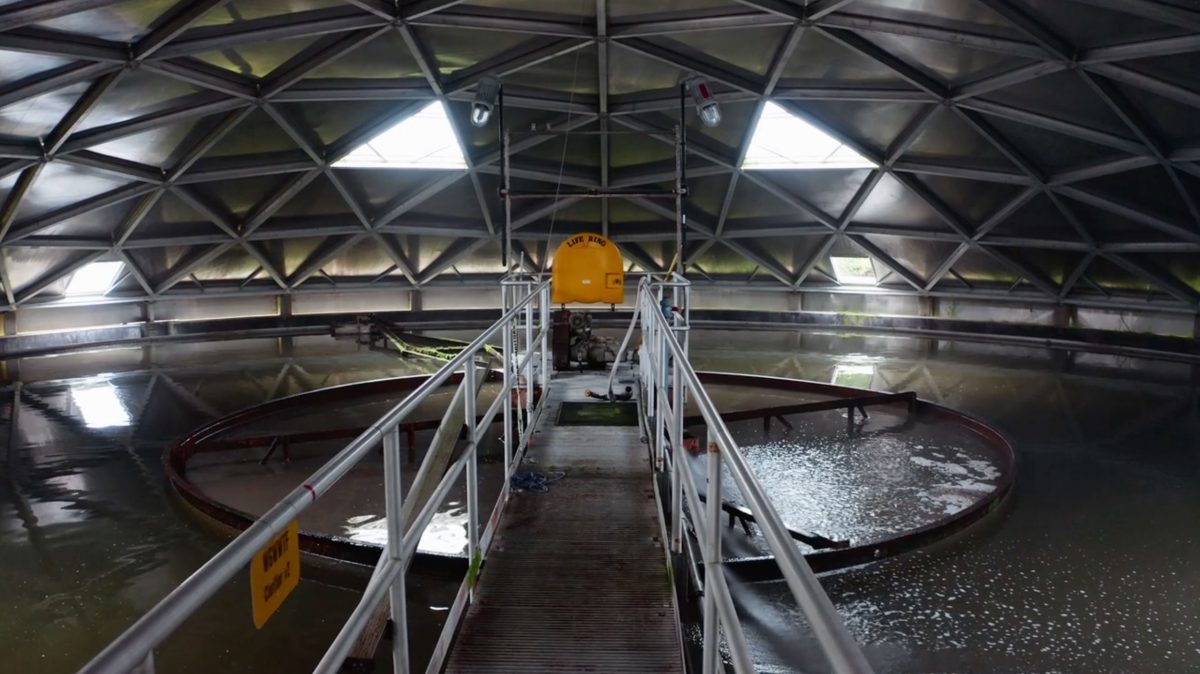
It features a storage tank with a capacity of 3.5 million gallons that is designed to capture the combination of stormwater and sewage that would normally be discharged to Back Cove during wet weather events. Discharges will now occur from the CSOs captured by the facility during only the largest rain events. This new infrastructure paired with existing pipes, trenches, and tanks increase total wet weather storage capacity in the Back Cove to 8 million gallons.

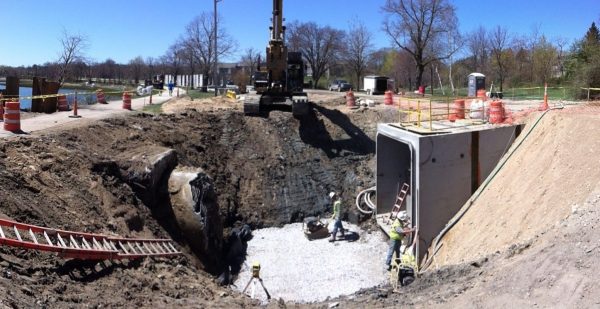
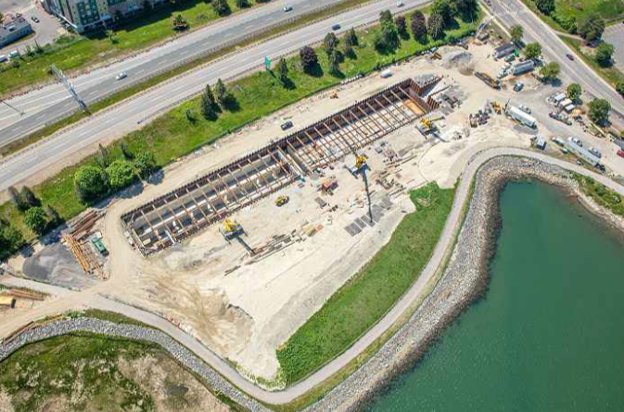
The Back Cove South Storage Facility in progress. Photo: City of Portland

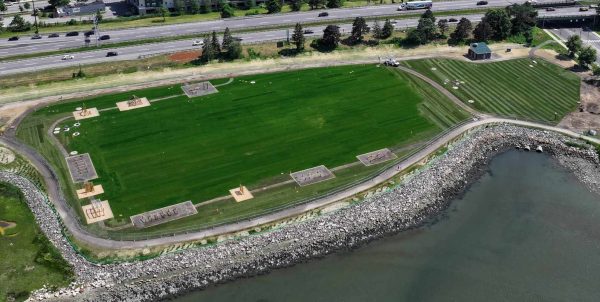
The new park over the Back Cove South Storage Facility, including sports fields and workout structures. Photo: City of Portland

Updated Sewer Infrastructure

Now, during large rain events, combined stormwater and sewage rushes into the combined sewer system of the Back Cove South Storage Facility and gets held temporarily in this tank, preventing discharge into Casco Bay. The contents of the tanks then get sent to the wastewater treatment plant and treated over the following days. Engineers predict that in the 15 storms that occurred in 2025 before September, 14 would have been completely captured in the facility and successfully treated.

CSO Storage Facility Includes New City Park

The last phase of the Back Cove South Storage Facility project included installation of an obstacle course and sports field. The city built the new park 3 feet higher than it had been previously to plan for sea level rise and flooding from intense storms. The storage facility reduces CSO discharge in Portland while also providing a resilient new green space for the city.

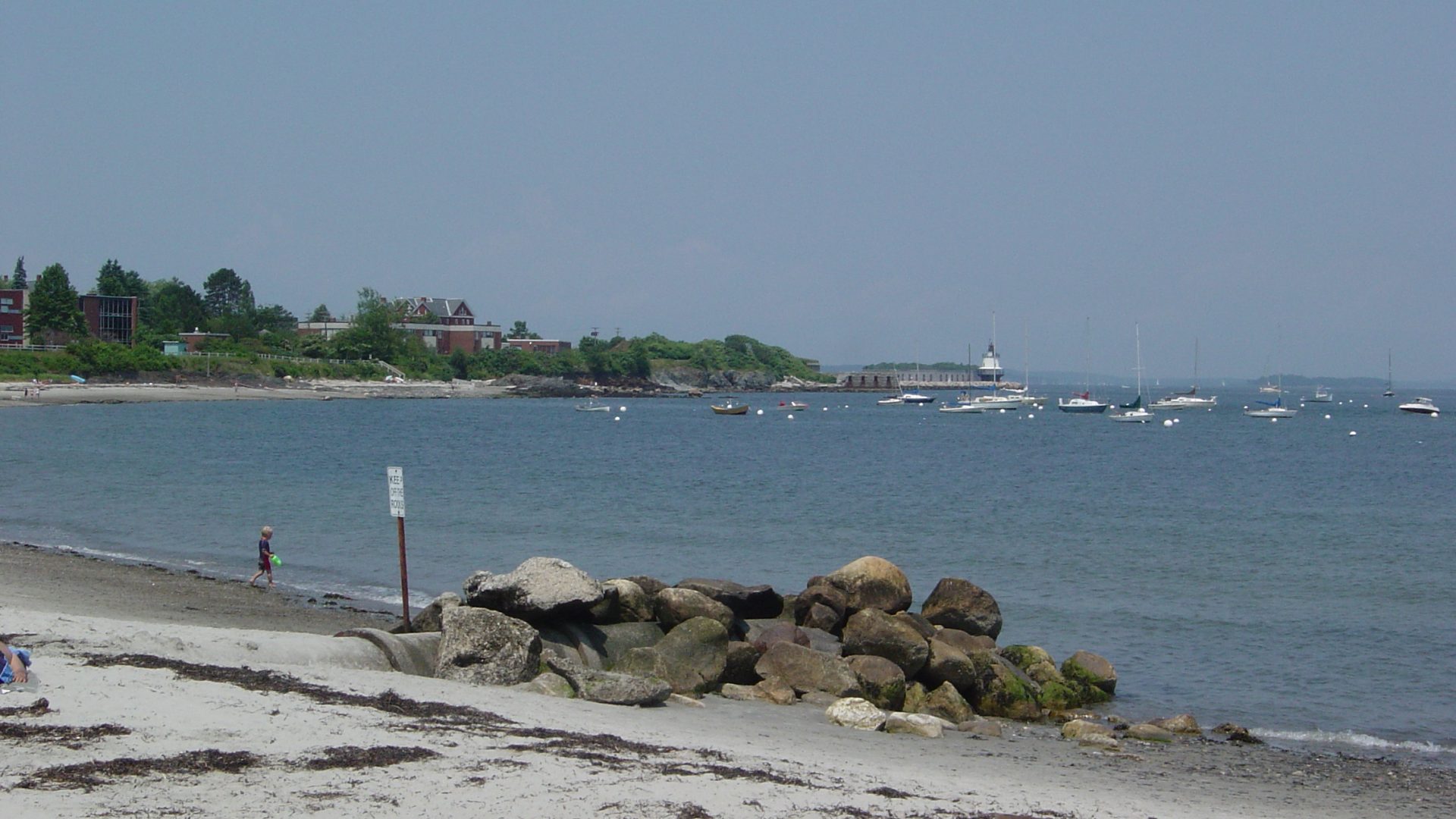
Willard Beach CSO

EPA Grants for Mitigation

There are three main ways to mitigate and decrease CSO discharges:

  1. Build storage facilities to store wet weather flows until treatment capacity is available
  2. Separation of sewer systems from stormwater systems
  3. Install larger interceptors and pump stations to push flows to treatment plants downstream.

All three strategies are viable and have been used in the Casco Bay watershed, but they remain expensive and increased costs can drive up rates for sewer service. Communities find it difficult to balance service costs while simultaneously addressing interconnected needs for CSO remediation, stormwater management, maintenance of sewer systems and expansion of wastewater treatment capacity. The remaining CSO remediation projects are also generally the most complex and expensive, as simpler projects were addressed in the early decades of remediation.

This spring, the Environmental Protection Agency (EPA) announced they will make $80 million available through a Sewer Overflow and Stormwater Reuse Municipal Grant program. Regional Allotments for Fiscal Year 2025 and Fiscal Year 2026 in Maine total $468,000.

Ch.4-Unless-Something-Goes-Terribly-Wrong
Still from the film, Unless Something Goes Terribly Wrong

Outreach Continues to be an Important Goal

Unless Something Goes Terribly Wrong, a film directed by Kaitlyn Schwalje & Alex Wolf Lewis, has received a lot of attention from communities across the watershed.

The film explores the challenges of aging wastewater infrastructure in Portland – specifically, the East End Wastewater Treatment Facility – and has served as an educational tool through screening events with Portland Water District, the Portland Museum of Art, and others.

Looking Ahead to 2030

Towns and cities with remaining CSOs are continuing efforts to eliminate outfalls and reduce discharge volumes. The City of Portland is actively working to complete construction projects in the area of Maple and Commercial Street and to update hydraulic models that will inform future projects to reduce CSO discharges to Portland Harbor and Fore River. Additional work is being completed to close the two remaining CSOs that discharge to freshwater streams off-peninsula. However, CSO mitigation requires significant infrastructure investment. Outreach and funding from regional and national sources will continue to be critical to decreasing discharges, but estimated costs of eliminating all remaining CSOs are so high that it is unlikely that CSO discharges will be fully eliminated.